- News
- UK
- UK Politics
Sir Brian Leveson, who was appointed by the government to conduct an independent review of the courts system, has urged the government to adopt his ideas in full
Tristan Kirk Wednesday 04 February 2026 00:01 GMT- Bookmark
- CommentsGo to comments
Bookmark popover
Removed from bookmarks
Close popover
 CloseDavid Lammy announces 'swift courts' in justice reform
Sign up for the View from Westminster email for expert analysis straight to your inbox
Get our free View from Westminster email
Get our free View from Westminster email
Email*SIGN UPI would like to be emailed about offers, events and updates from The Independent. Read our Privacy notice
A retired senior judge has urged the Prime Minister to take direct leadership over the escalating crisis within the UK’s courts system and has pushed for a radical transformation of the criminal justice system.
Sir Brian Leveson, who was appointed by the government last year to conduct an independent review amid spiralling court backlogs and prisons reaching maximum capacity, presented his second set of findings on Wednesday.
The former Court of Appeal judge’s recommendations include the establishment of a new position: a Prime Minister’s criminal justice adviser.
This role would be central to government operations, tasked with overseeing the work of courts, prisons, prosecutors, and police.
Sir Brian’s comprehensive report, which exceeds 700 pages, outlines more than 130 proposals designed to rectify the systemic issues plaguing the justice system.
“I have never seen pressure on the courts at such an unacceptable level – the system stands on the brink of collapse,” he said.
“Victims, witnesses and defendants are waiting months, sometimes years, for cases to come to trial – unable to move on with their lives.
“System-wide inefficiency is undermining the ability of the criminal courts to function, exacerbating the strain caused by the demanding caseload.”
Sir Brian has proposed increased use of AI across criminal justice, more offenders being sentenced from prison over videolinks, and a string of measures intended to streamline the court process.
 open image in gallerySir Brian Leveson conducted a review into the courts and made recommendations for improvements (PA Archive)
He is aiming to tackle “deep-rooted operational issues”, and urged Government to adopt his ideas in full, warning: “There is no silver bullet – the review represents a package of reforms: efficiency and funding alone are not enough – only alongside structural reform can we address, and hopefully overcome, the crisis in our justice system.”
Speaking to journalists before publication, Sir Brian urged ministers and criminal justice agencies to “get on with it” and said some of his recommendations could be acted upon immediately.
“The police can pick out bits immediately. The CPS can pick up bits immediately. The court, the judiciary can pick up bits immediately. Do I want them to? Yes, I do.”
He said a new adviser to the Prime Minister on justice could be appointed immediately, even if legislation to make the role permanent has to follow later.
“I believe that we need to get on with it,” he added. “We have got to throw everything at this problem now.”
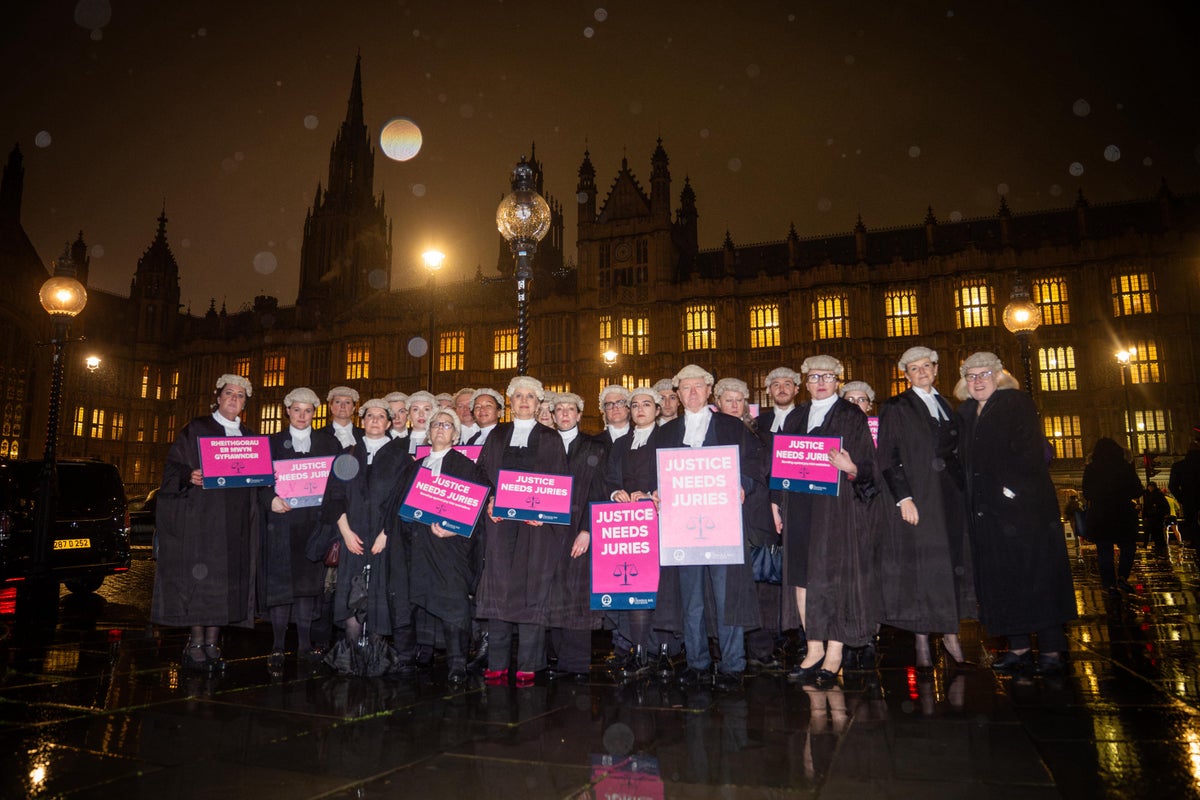
In the first part of his findings, delivered last July, Sir Brian recommended reorganising the criminal courts – including a controversial plan to scale back the right to trial by jury.
Plans in his second report, published on Wednesday, would put Prime Minister Sir Keir Starmer – a former director of public prosecutions – in personal charge of the crisis by bringing the power to co-ordinate justice policy into Downing Street.
Sir Brian hit out at “siloed decision-making” across the courts, police forces, prisons, the Crown Prosecution Service (CPS), and probation services – suggesting “fragmented governance” is contributing to the declining state of the justice system.
He highlighted the pledge by Boris Johnson’s government in 2019 to hire 20,000 new police officers without adequate funding for the predictable knock-on effects for the rest of the justice system.
There was “inadequate preparation for the predictable consequences for the CPS (in charging the greater volume of offenders apprehended), the courts (in trying these additional cases) and the prisons and probation services (in detaining and rehabilitating these offenders)”, he wrote.
Sir Brian likened the new role of criminal justice adviser to Britain’s national security adviser, with the ability to be a “central co-ordinator” with oversight of the Ministry of Justice, the Home Office, and the Attorney General’s Office.
“A criminal justice adviser would be a dedicated leader with criminal justice as their sole agenda, rather than as a part of a much bigger role,” Sir Brian wrote in his report.
“The criminal justice adviser would work from the centre of government co-ordinating work related to the vision for the criminal justice system.”
The new post should be written into law to stop a future government ditching it to save money, Sir Brian said, as well as recommending that the adviser takes charge of criminal justice spending, reports directly to the Prime Minster, answers regularly to Parliament, and is able to “take a whole-system view without a vested stake in any one part”.
 open image in gallerySir Brian hit out at “siloed decision-making” across the courts, police forces, prisons, the Crown Prosecution Service (CPS), and probation services (David Jones/PA)
The backlog of cases in the Crown Courts of England and Wales has now reached around 80,000, while the MoJ is predicting it will increase to 100,000 by November next year.
Criminal trials are now being set in 2030, and there are dire warnings across the criminal justice sector that victims and witnesses are walking away from the court process instead of enduring years of delay.
In Sir Brian’s second report he recommends an aggressive increase in the use of AI, including by CPS lawyers drafting case file summaries, by court officials reviewing witness statements, and acting as a translator for defendants who do not understand English.
He suggested some pre-trial hearing should be conducted virtually “by default”, and police and professional witnesses should give evidence in trials by videolink.
And Sir Brian also proposed that many convicted criminals could be sentenced over a videolink from jail, to cut pressure on court cells and prison transport services.
“I recommend that His Majesty’s Courts and Tribunals Service and the judiciary should only require remanded defendants to appear in-person for sentencing hearings if a victim impact statement will be delivered in court,” he wrote.
Sir Brian urged greater collaboration between police and the CPS to decide more quickly whether to bring criminal charges and to prepare cases effectively for court to cut down on wasted hearings.
In the courts, Sir Brian has already called for Government to approve unlimited sitting days, and he said there should be more flexibility to move cases between different courts to take advantage of empty hearing rooms.
Since the publication of Sir Brian’s first report, politicians and lawyers have highlighted the chronic problem of prisoners being brought late to court, causing significant delays to hearings.
Sir Brian urged ministers to renegotiate the terms of the prison transport contracts when possible, to introduce tough new targets and monitoring of the problems, and to allow prison transport vans to start using bus lanes to get to court on time.
 open image in gallerySir Brian’s comprehensive report outlines more than 130 proposals designed to rectify the systemic issues plaguing the justice system (Stefan Rousseau/PA)
The retired judge also called for a new strategy to fix the country’s crumbling court buildings.
The Government agreed to many of the measures put forward in Sir Brian’s first report, and is pushing forward with plans to scale back jury trials in the Crown Courts.
Sir Brian’s second report includes a call to implement some of the changes immediately, but he also accepts that some of his ideas will take time and need legislation and funding before they can take effect.
Responding to the report, Deputy Prime Minister and Lord Chancellor David Lammy said: “Our courts are in crisis and thousands of victims are waiting far too long to get justice. That’s why I have been clear that a programme of modernisation, investment, and reform is needed to help deliver justice which is both fairer and faster.
“Efficiencies alone are not a silver bullet, but making the system more efficient and saving time across the board is a vital part of a wider package to tackle the problem of victims suffering for years for their cases to be heard.
“We inherited a creaking justice system struggling with the burden of modern crime and using digital technology in order to make courts more efficient will be a central pillar of our approach to modernisation.
“I want to thank Sir Brian and the review team for their hard work developing solutions to solve the crisis in our courts. We have already confirmed that we are taking forward reforms based on his first recommendations, and we will urgently consider the proposals set out today and respond to them in the coming weeks.”
The Magistrates Association said there is “much to like” in Sir Brian’s report, but warned that proposals to harness the power of AI may be too ambitious.
“The history of IT projects in the courts system is not a happy one”, said the body, pointing out that some magistrates still do not have a working laptop and urging the courts service to “get the basics right”.
Metropolitan Police Commissioner Sir Mark Rowley called Sir Brian’s recommendations “a clear, credible path forward”, and said: “Victims and the police need a justice system that is quicker, less burdensome, and one that empowers officers to charge more offences directly so we can prevent harm and keep people safe.
“Sir Brian’s review gives us a pathway to achieve precisely that.
More about
judgePrime MinisterJustice SystemPrisonscriminal justice systemJoin our commenting forum
Join thought-provoking conversations, follow other Independent readers and see their replies
Comments