
- News
- Science
- Archaeology
The discovery was made at Wandlebury Country Park near Cambridge
Sam Russell Wednesday 04 February 2026 00:01 GMT- Bookmark
- CommentsGo to comments
Bookmark popover
Removed from bookmarks
Close popover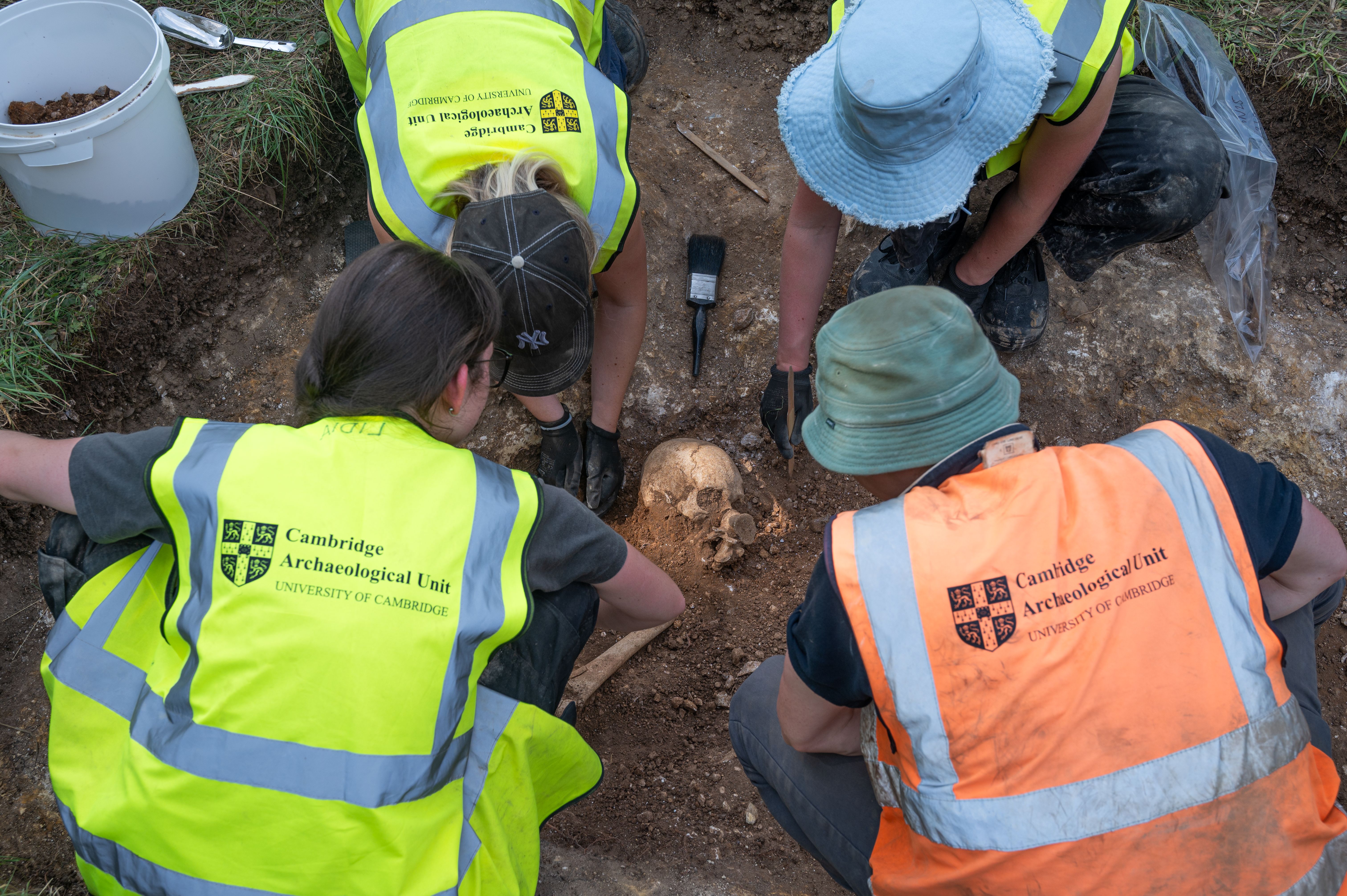 open image in galleryCambridge University students helped discover a burial pit containing the remains of at least 10 people, possibly Vikings or Saxons (Cambridge Archaeological Unit)
Sign up for our free Health Check email to receive exclusive analysis on the week in health
Get our free Health Check email
Get our free Health Check email
Email*SIGN UPI would like to be emailed about offers, events and updates from The Independent. Read our Privacy notice
A group of Cambridge University students on a training dig have helped unearth the remains of at least 10 people in what appears to be a burial pit.
The discovery, made at Wandlebury Country Park near Cambridge, may date from around the ninth century AD, a period when the area was a frontier in clashes between Vikings and Saxons over territory.
Inside the pit, archaeologists identified the remains of 10 people based on the number of skulls, including at least one decapitation.
Four complete skeletons were found, some in positions suggesting they were tied up, alongside dismembered remains, including a cluster of skulls and a stack of legs.
It’s believed the remains were all of young men and may have been from a mass execution or flung into the pit without care after a battle.
The training dig was part of Cambridge University’s undergraduate degree in archaeology, in conjunction with Cambridge Archaeological Unit and local charity Cambridge Past, Present and Future, which owns Wandlebury.
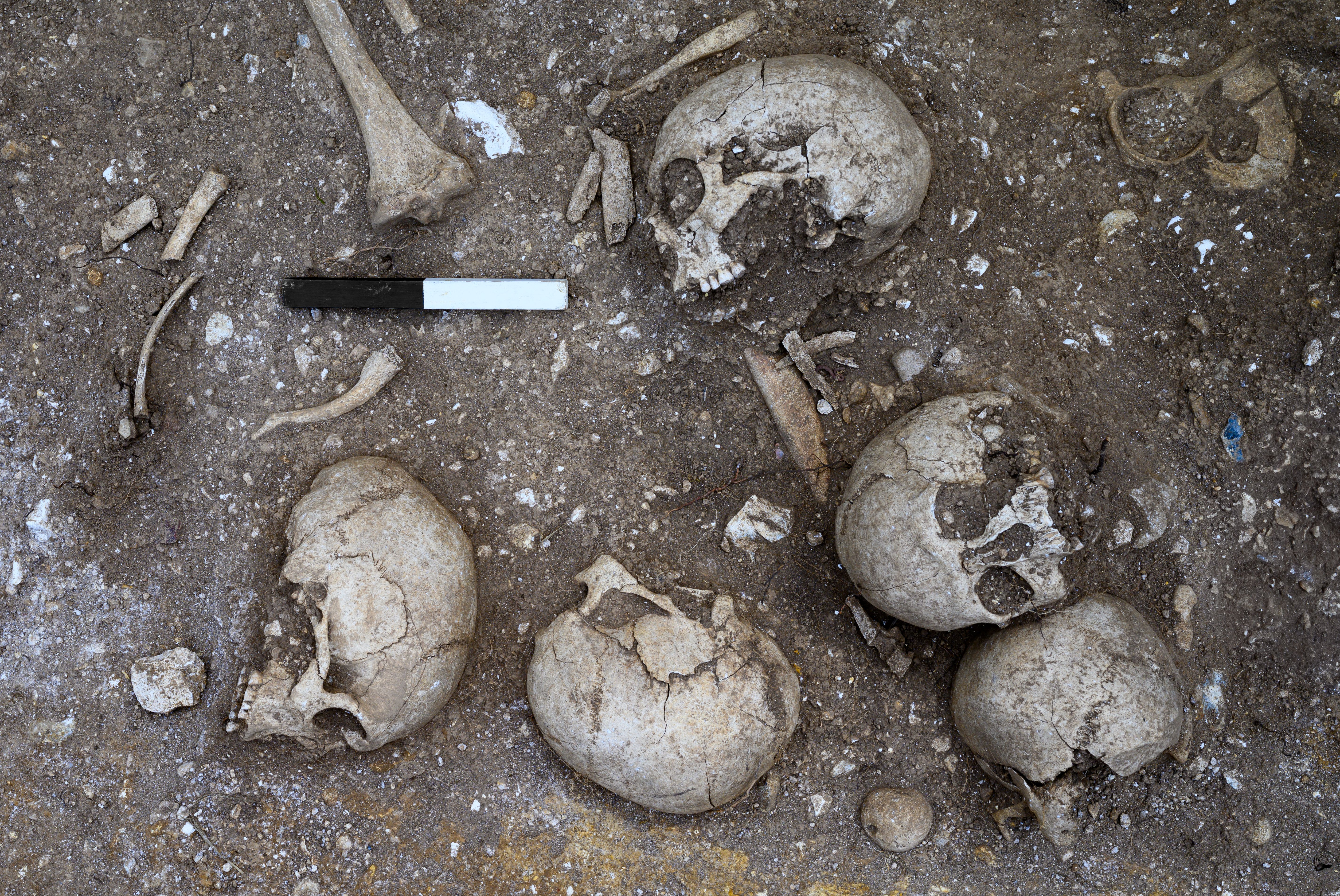 open image in galleryThe find, at Wandlebury Country Park near Cambridge, may date from around the ninth century AD (Cambridge Archaeological Unit)
Dr Oscar Aldred of Cambridge Archaeological Unit, who led the excavation, said: “Those buried could have been recipients of corporal punishment, and that may be connected to Wandlebury as a sacred or well-known meeting place.
“It may be that some of the disarticulated body parts had previously been displayed as trophies, and were then gathered up and interred with the executed or otherwise slaughtered individuals.
“We don’t see much evidence for the deliberate chopping up of some of these body parts, so they may have been in a state of decomposition and literally falling apart when they went into the pit.”
He said Cambridgeshire was a “frontier zone” where Saxons and Vikings “clashed over territory across many decades”.
“We suspect the pit may relate to these conflicts.”
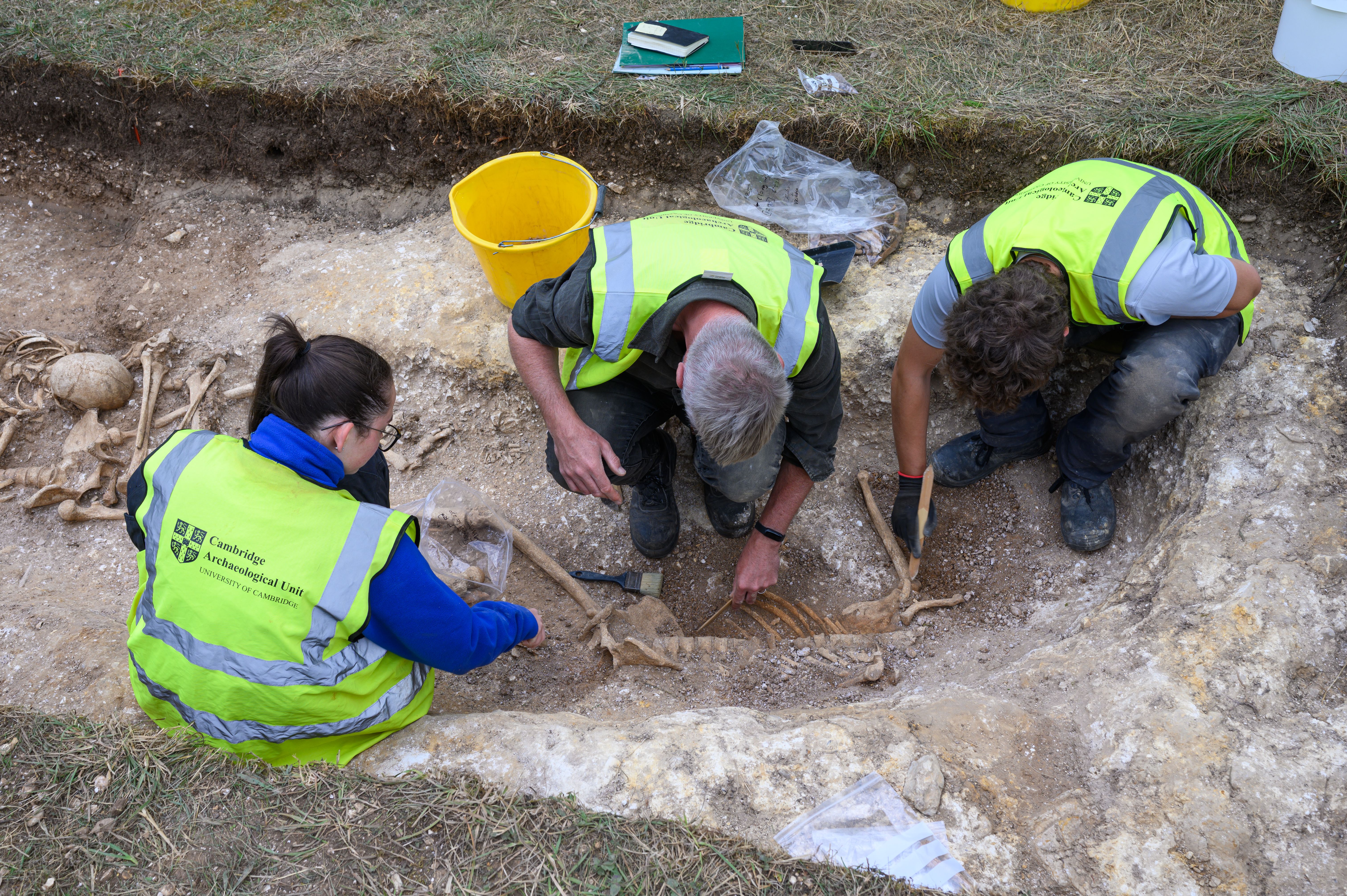 open image in galleryStudents and the Cambridge Archaeological Unit working in the burial pit (Cambridge Archaeological Unit)
Third year Cambridge archaeology student Olivia Courtney, from Bath, said: “Before we uncovered the first remains, our best find was a 1960s Smarties lid.
“I had never encountered human remains on a dig, and I was struck by how close yet distant these people felt.
“We were separated by only a few years in age, but over a thousand years in time.”
Grace Grandfield, a Cambridge undergraduate from York who took part in the dig, said: “I would never have expected to find something like this on a student training dig.
“It was a shocking contrast to the peaceful site of Wandlebury.”
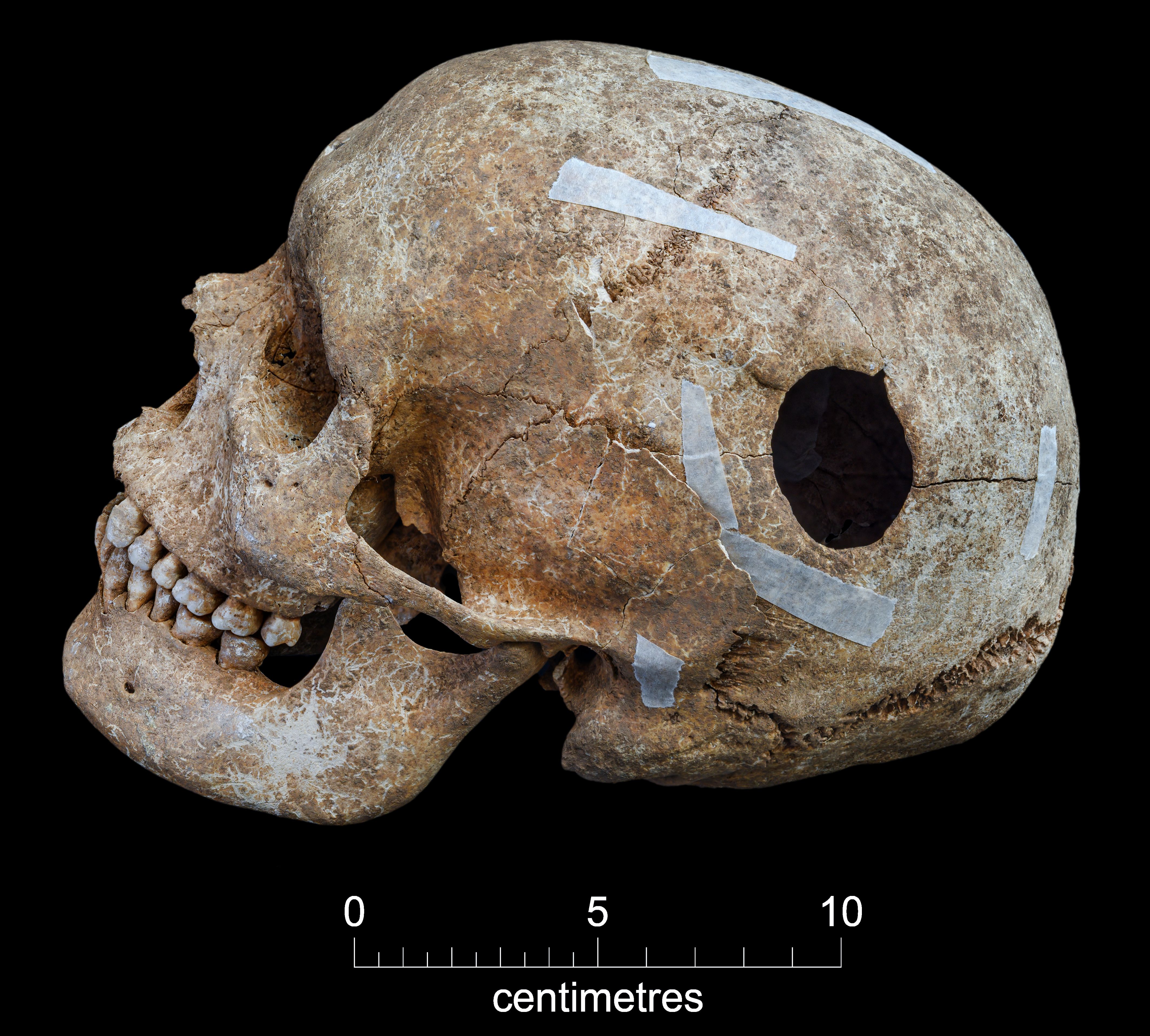 open image in galleryA skull found in the burial pit with a 3cm diameter hole (Cambridge Archaeological Unit)
The burial included a man estimated to be 6ft 5in tall, well over the then-average male height of around 5ft 6in.
Archaeologists believe the man’s height may have been due to a growth condition, and identified a 3cm diameter hole in his skull, which suggested an ancient surgical procedure had been carried out on him.
Dr Trish Biers of Cambridge University said: “The individual may have had a tumour that affected their pituitary gland and caused an excess of growth hormones.”
Historic England, which is supporting the excavation, has commissioned a new geophysical survey of the area that archaeologists hope will reveal more about the site surrounding the burial pit.
The discovery will feature in an episode of Digging For Britain, which is due to air on BBC Two on Wednesday.
More about
Cambridge UniversityCambridgeCambridgeshireJoin our commenting forum
Join thought-provoking conversations, follow other Independent readers and see their replies
Comments