- Computing
- Computing Components
- Memory
There's sadly no super-speedy 'turbo' fix for the memory crisis…
When you purchase through links on our site, we may earn an affiliate commission. Here’s how it works.
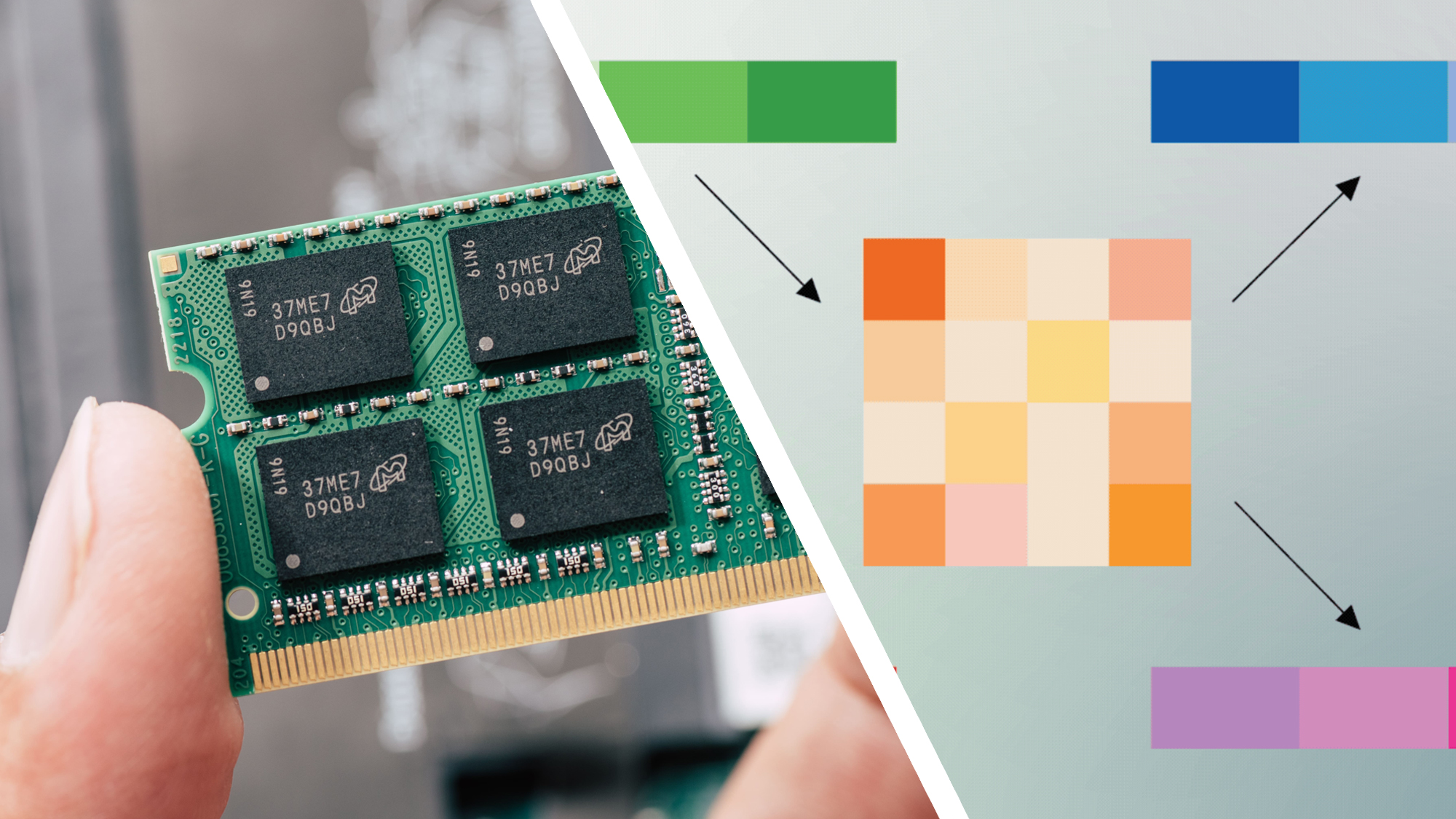 (Image credit: Shutterstock / Nor Gal)
- Copy link
- X
- Threads
Sign up for breaking news, reviews, opinion, top tech deals, and more.
Become a Member in Seconds
Unlock instant access to exclusive member features.
Contact me with news and offers from other Future brands Receive email from us on behalf of our trusted partners or sponsors By submitting your information you agree to the Terms & Conditions and Privacy Policy and are aged 16 or over.You are now subscribed
Your newsletter sign-up was successful
Join the club
Get full access to premium articles, exclusive features and a growing list of member rewards.
Explore An account already exists for this email address, please log in. Subscribe to our newsletterIs TurboQuant a silicon bullet to solve the RAM crisis? No, it isn't, and if you were hoping that the compression algorithm that Google recently announced would be a major turning point for AI memory-related woes, I'm afraid you might have to think again.
Sadly, for me, the RAM crisis remains a towering specter that'll likely continue to be a considerable blight on the PC landscape for a long time to come yet. Certainly, a good deal of online opinion has crystallized around the notion that Google hasn't got an ace up its sleeve with TurboQuant.
Article continues below You may like-
 'It really is the craziest time ever': RAM crisis will hit consumers hard
-
DDR4 RAM price falls — but don't get carried away with any optimism yet
-
 Hold your horses — it's still not time to buy RAM despite price drops
Turbo mode: efficiency or performance?

Okay, that's all well and good, but as this report in the Korea Times makes clear, analysts feel differently to Google (and indeed those investors) about the impact that TurboQuant might have, and what it'll mean for AI and RAM supply more broadly.
An analyst for Samsung Securities, Lee Jong-wook, observed that: "There have been efforts to improve AI models to optimize chip usage, but more efficient models tend to lower overall costs and, in turn, drive greater demand for AI computing. Rather than reducing semiconductor demand, such optimized models are being used to deliver higher-performance AI services with the same chip resources."
Get daily insight, inspiration and deals in your inboxContact me with news and offers from other Future brandsReceive email from us on behalf of our trusted partners or sponsorsBy submitting your information you agree to the Terms & Conditions and Privacy Policy and are aged 16 or over.In other words, we won't see less RAM being used in AI data centers thanks to TurboQuant, but memory will continue to be gobbled up at the same rate, with the LLMs getting better performance instead. That improved performance will be preferred to achieving better efficiency for models (and any potential cost savings therein).
After that, better AI will drive more people to use that AI, and make these LLMs more accessible, creating more demand to satiate, requiring yet more data center resources (including memory).
Lee observes: "As long as AI companies compete on performance rather than cost, optimization will not weigh on semiconductor demand." And in the current climate, where the AI bubble is still expanding, and competition between the giant LLMs out there is fierce, the prevailing opinion is that tech like TurboQuant is not going to ease the pace of RAM consumption with the big AI players.
What to read next-
 SK Group chairman's bleak warning on RAM crisis: it could last until 2030
-
 Micron is 'trying to help consumers' in RAM crisis despite Crucial closure
-
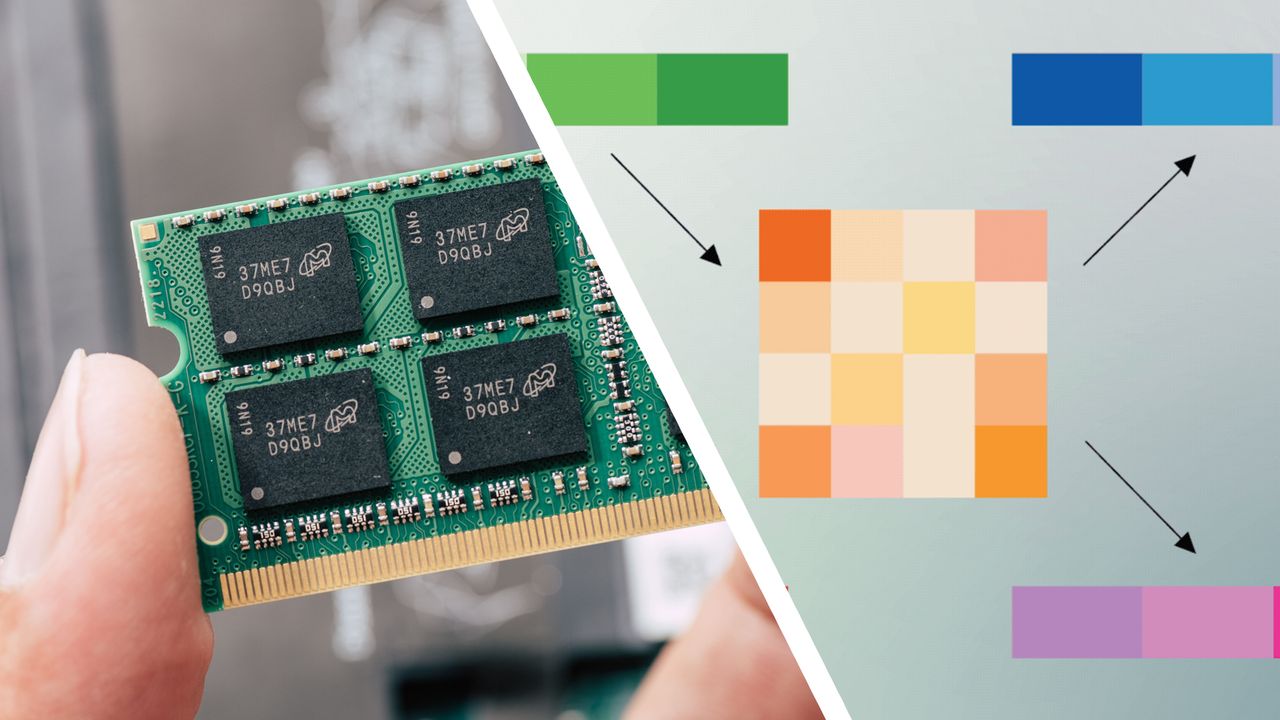
 Google’s new compression drastically shrinks AI memory use while quietly speeding up performance
Another analyst, Kim Rok-ho of Hana Securities, adds some further thoughts: "Compression technologies are not new, and it remains uncertain whether they will be widely adopted across the [AI] industry. Even if such technologies become more widely used over the mid to long term, it will lower memory cost barriers, expanding overall AI use. There are limited chances of decline in demand for DRAM and storage."
The fact that TurboQuant isn't alone, and similar tricks have been tried with AI over the past couple of years, is a good point. Yes, Google is claiming it has something very different here – in terms of the tech not lessening the quality of the AI's output – but that remains to be seen in action.
There's plenty of skepticism on Reddit about how Google has spun or hyped TurboQuant, and the reality of the claims made about the tech. And of course, it's still just research at this point, and whether it'll be realized for deployment on a large-scale basis, well, only time will tell.
And again, Kim comes back to the theory that even if TurboQuant does become widely adopted, it's going to drive more AI usage, as opposed to driving down the amount of RAM used by LLMs.
Memory misery loves company

Even if you accept the arguments that TurboQuant is not the panacea for AI-driven RAM shortages – and I feel they're compelling and persuasive views myself – you might still point hopefully to other recent developments that suggest the worst of the memory crisis might just be over. Unfortunately, I feel that these hints are red herrings, too.
I'm mainly thinking of another analyst firm, this time TrendForce, which recently published a report talking about DDR5 RAM price drops in the US, Europe and Asia. While prices do appear to be easing currently, this is more about price tags reaching a ridiculous level where consumers just fold their arms and flat-out refuse to buy, than it is anything to do with supply improvements or bolstered stock.
Granted, it's good to see some downward movement with retail prices, I'm not against that – obviously – but nothing's changing regarding the contract prices of RAM for the big memory manufacturers, which suggests the overall picture remains much the same. As TrendForce acknowledges, in the lens of that broader view, this positivity is a "consumer-driven, short-term adjustment" rather than the start of a full-on turnaround.
Another optimistic nugget was laptop maker Framework being able to keep cost increases to a minimum with memory-related hikes this month. However, the company observed that "all indications are that this is a temporary reprieve and that we'll continue to see volatility and cost increases through the rest of 2026".
I don't doubt that, frankly, when we also see the prices of GPUs – which were already expensive – climbing again due to the rising cost of video RAM. Or nasty hikes with gaming laptops due to memory and storage price increases, or Mac computers with painfully long lead times for delivery reportedly thanks to the memory crisis, or… you get the idea.
This just isn't going away, and the predictions that we won't see any meaningful improvement in the well-off-kilter balance of RAM supply and demand until 2028 feel just as entrenched as they were a month or two ago — with Google's TurboQuant seemingly unlikely to ride in and save the day.
 The best laptops for all budgetsOur top picks, based on real-world testing and comparisons
➡️ Read our full guide to the best laptops1. Best overall: Apple MacBook Air 13-inch M42. Best budget: Asus Chromebook CM143. Best Windows 11 laptopMicrosoft Surface Laptop 13-inch4. Best gaming:Razer Blade 165. Best for prosMacBook Pro 16-inch (M4 Pro)
Follow TechRadar on Google News and add us as a preferred source to get our expert news, reviews, and opinion in your feeds. Make sure to click the Follow button!
And of course, you can also follow TechRadar on YouTube and TikTok for news, reviews, unboxings in video form, and get regular updates from us on WhatsApp too.
TOPICS Google AI CATEGORIES AI Platforms & Assistants Darren AllanDarren is a freelancer writing news and features for TechRadar (and occasionally T3) across a broad range of computing topics including CPUs, GPUs, various other hardware, VPNs, antivirus and more. He has written about tech for the best part of three decades, and writes books in his spare time (his debut novel - 'I Know What You Did Last Supper' - was published by Hachette UK in 2013).
View MoreYou must confirm your public display name before commenting
Please logout and then login again, you will then be prompted to enter your display name.
Logout Read more
Memory
'It really is the craziest time ever': RAM crisis will hit consumers hard
Memory
DDR4 RAM price falls — but don't get carried away with any optimism yet
Memory
Hold your horses — it's still not time to buy RAM despite price drops
Memory
SK Group chairman's bleak warning on RAM crisis: it could last until 2030
Memory
Micron is 'trying to help consumers' in RAM crisis despite Crucial closure
 Pro
‘We are only able to supply, for our key customers in the midterm, about 50% to two-thirds of their requirements’: Micron CEO forecasts production spend increase to meet the insane demand for memory – but the RAM crisis will only get worse
Latest in Memory
Memory
DDR4 RAM price falls — but don't get carried away with any optimism yet
Pro
‘We are only able to supply, for our key customers in the midterm, about 50% to two-thirds of their requirements’: Micron CEO forecasts production spend increase to meet the insane demand for memory – but the RAM crisis will only get worse
Latest in Memory
Memory
DDR4 RAM price falls — but don't get carried away with any optimism yet
 Memory
Asus RX 9070 XT GPUs are now pricier, while Framework warns on RAM crisis
Memory
Hold your horses — it's still not time to buy RAM despite price drops
Memory
TrendForce report sparks hope that we might be turning a corner in the RAM crisis
Memory
Asus RX 9070 XT GPUs are now pricier, while Framework warns on RAM crisis
Memory
Hold your horses — it's still not time to buy RAM despite price drops
Memory
TrendForce report sparks hope that we might be turning a corner in the RAM crisis
 Gaming PCs
Handheld gaming PCs were reawakening, but the AI boom is undoing it all
Memory
SK Group chairman's bleak warning on RAM crisis: it could last until 2030
Latest in Features
Gaming PCs
Handheld gaming PCs were reawakening, but the AI boom is undoing it all
Memory
SK Group chairman's bleak warning on RAM crisis: it could last until 2030
Latest in Features
 AI Platforms & Assistants
Meta AI highlights its social media origin when matched against ChatGPT
AI Platforms & Assistants
Meta AI highlights its social media origin when matched against ChatGPT
 Health & Fitness
Not a squat, not a deadlift — the trap bar deadlift 'sits between' them and builds muscle quicker
Health & Fitness
Not a squat, not a deadlift — the trap bar deadlift 'sits between' them and builds muscle quicker
 Turntables
Record Store Day vinyl lands in one week — what you need to know
Turntables
Record Store Day vinyl lands in one week — what you need to know
 BBC iPlayer
Beyond Paradise season 4 star would love a Traitors crossover episode
BBC iPlayer
Beyond Paradise season 4 star would love a Traitors crossover episode
 iPhone
‘Apple will grit its teeth and push through’ — new report suggests the iPhone Air 2 isn’t dead, and I sincerely hope it’s true
iPhone
‘Apple will grit its teeth and push through’ — new report suggests the iPhone Air 2 isn’t dead, and I sincerely hope it’s true
 Netflix
Trust Me: The False Prophet is Netflix's greatest true crime series to date
LATEST ARTICLES
Netflix
Trust Me: The False Prophet is Netflix's greatest true crime series to date
LATEST ARTICLES- 1Not a squat, not a deadlift — the trap bar deadlift 'sits between' the two, builds muscle fast and is safe for the over-50 crowd
- 2One week 'til Record Store Day 2026! The date, the top vinyl drops, and everything else you need to know
- 3Beyond Paradise season 4 star would 'love' to do The Celebrity Traitors season 2 — and would be 'terrified' if one contestant came to Shipton Abbott
- 4'There’s no one-size-fits-all office chair': Vari explains the design decisions behind its award-winning chairs and desks, and how it's bringing over 100 new products to market this year
- 5I tested Turtle Beach's Mario-themed controller and headset for Nintendo Switch 2 — and they surprised me for 5 key reasons