
- Pro
Proprietary models are good for Canva
When you purchase through links on our site, we may earn an affiliate commission. Here’s how it works.
 (Image credit: Getty Images)
- Copy link
- X
- Threads
Sign up to the TechRadar Pro newsletter to get all the top news, opinion, features and guidance your business needs to succeed!
Become a Member in Seconds
Unlock instant access to exclusive member features.
Contact me with news and offers from other Future brands Receive email from us on behalf of our trusted partners or sponsors By submitting your information you agree to the Terms & Conditions and Privacy Policy and are aged 16 or over.You are now subscribed
Your newsletter sign-up was successful
Join the club
Get full access to premium articles, exclusive features and a growing list of member rewards.
Explore An account already exists for this email address, please log in. Subscribe to our newsletterWith tech companies globally now building out their own AI tools, many face the same question: should they build their own models, fine-tune or distil existing offerings, or just wholly rely on a third party?
For Canva, the one-word answer is 'hybrid', but the company is clearly favoring training its own models and it starts to make a lot of sense when you uncover why.
Article continues below You may like-
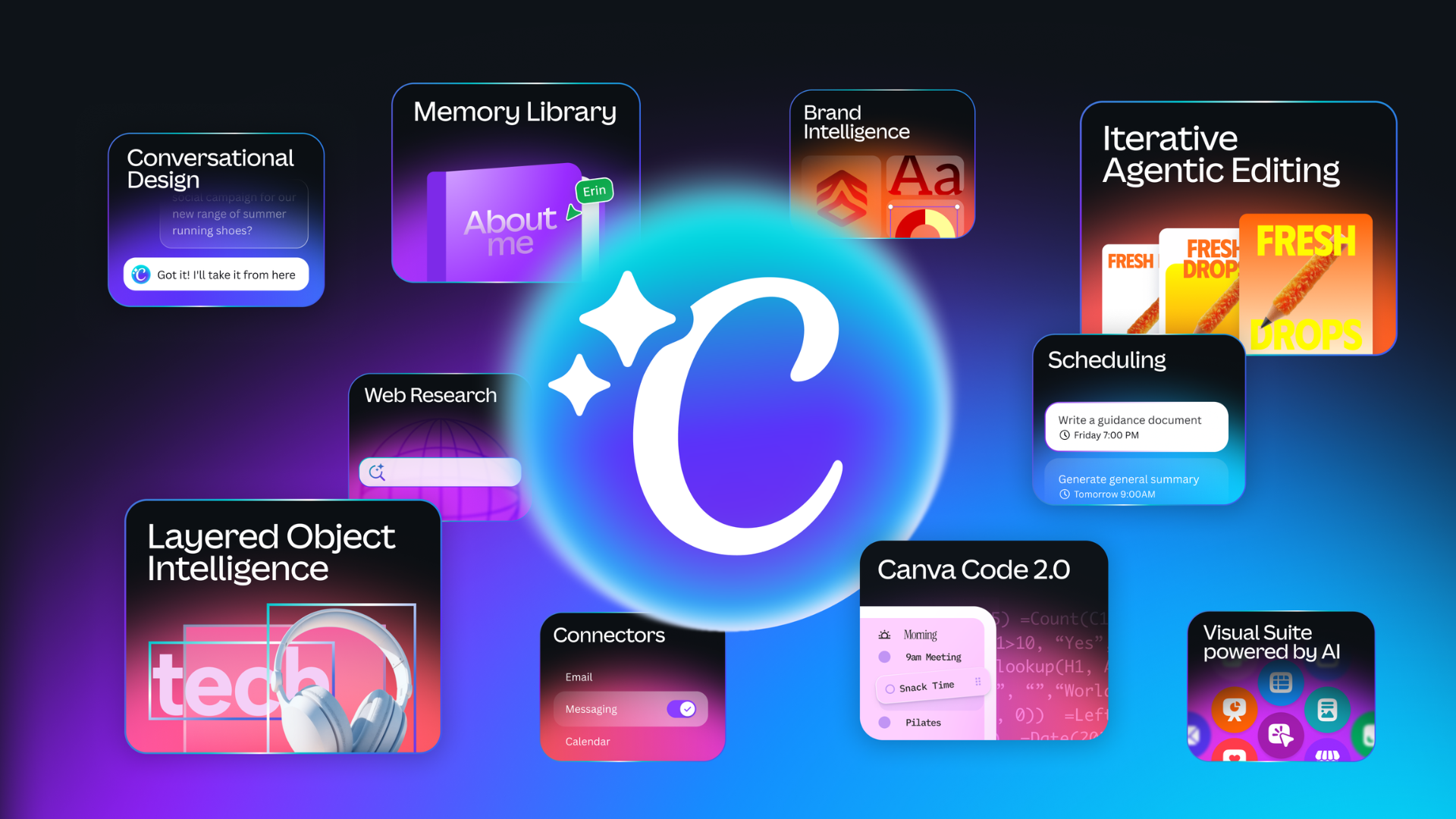 Two years in the making: Canva AI 2.0 required an entire re-architecturing effort, and its yours to try if you can find the easter egg
-
 Domain-specific AI models are the future of enterprise ROI
-
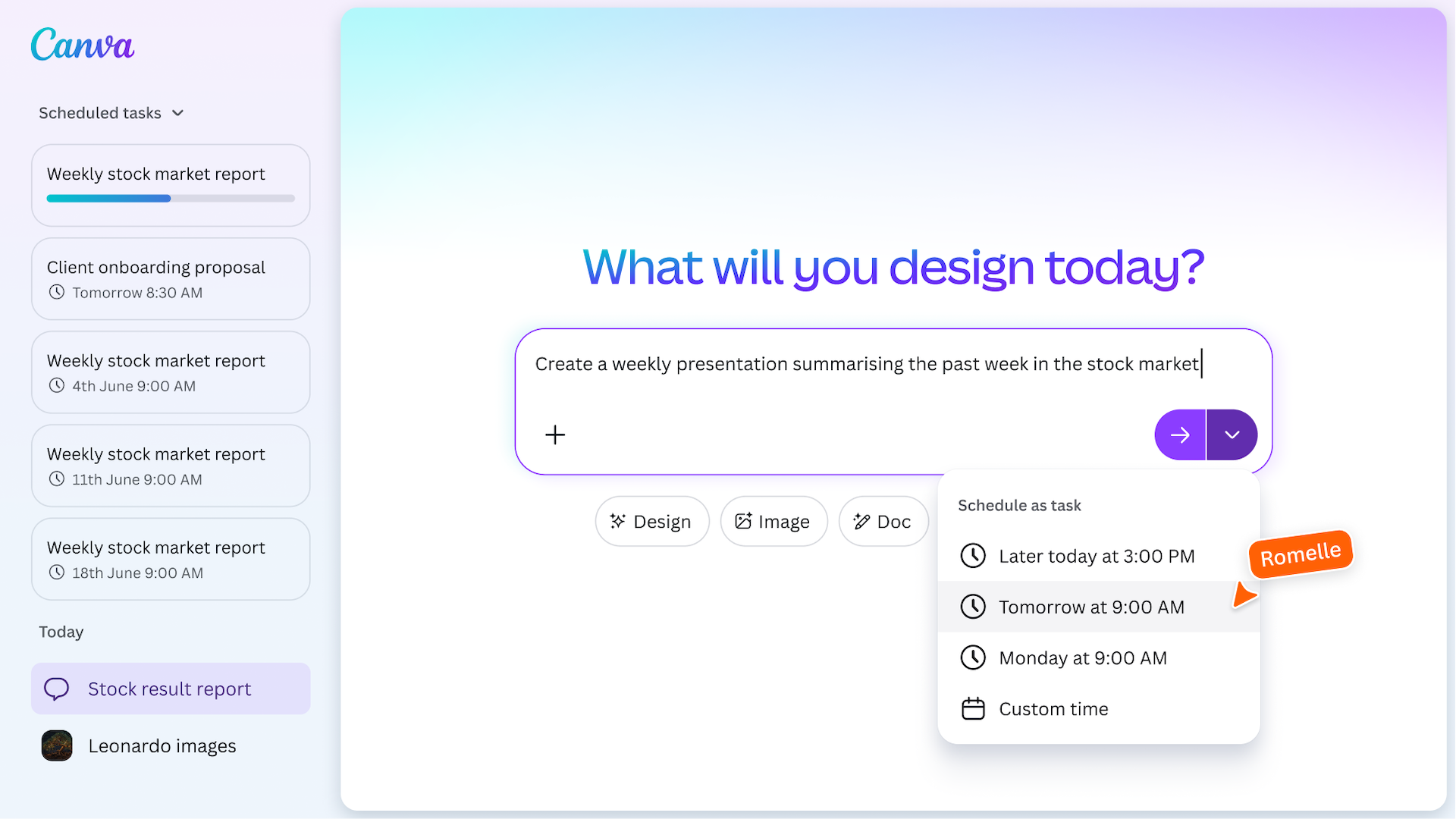 This is Canva's take on OpenClaw and Claude Cowork
It makes sense for Canva to train its own models
When Canva launches a new AI feature, it doesn't wait to build everything from scratch. While its growing portfolio of models might now start acting as a basis, the company has long been plugging into some of the most popular models on the market during the early stages.
"If there's a good third-party model, we will just use it, so that we start seeing usage," Head of AI Research Stef Corazza explained to TechRadar Pro at Canva Create 2026.
This 'buy first' phase gives Canva quicker access to something more valuable – real user behavior. The whole goal is to meet the customer where they are with an effective solution, so if a certain tool turns out to be a flop, endless hours and resources training a specific model variant could end up being wasted.
When using a third-party model, the goal isn't perfection: it's learning. It's when a real use case becomes apparent that Canva then goes on to invest in proprietary solutions, and this is where it gets better, Corazza notes.
Are you a pro? Subscribe to our newsletterContact me with news and offers from other Future brandsReceive email from us on behalf of our trusted partners or sponsorsBy submitting your information you agree to the Terms & Conditions and Privacy Policy and are aged 16 or over.Firstly, once a feature is being used by millions of people, the economics change. Third-party models become expensive to run at scale, but more importantly, generic outputs stop being good enough.
Why build at all?
By training its own models, Canva can reduce inference costs dramatically, optimize performance for specific tasks and control how the AI behaves inside its platform.
General-purpose models try to do everything, but with that comes a lot of unnecessary noise. Canva's proprietary models can become much lighter, more streamlined and dedicated to a specific task.
Instead of building one large model to do everything, it can build many focused ones that each do one thing well, and feedback about how users generate content, how they edit it and what they publish creates a continuous loop.
Ultimately, by being in control of all the layers of Canva AI 2.0 beneath the Visual Suite that users interact with, it gives Canva control over the full stack, building efficiency into the platform that keeps costs low and allows the company to offer a free tier and unpaid access to the likes of education users.
It also serves as a gentle reminder that bigger isn't always better, and that a more focused approach can make AI feel more like an extension of an existing process rather than a disconnected feature.
 Craig Hale
With several years’ experience freelancing in tech and automotive circles, Craig’s specific interests lie in technology that is designed to better our lives, including AI and ML, productivity aids, and smart fitness. He is also passionate about cars and the decarbonisation of personal transportation. As an avid bargain-hunter, you can be sure that any deal Craig finds is top value!
View MoreYou must confirm your public display name before commenting
Please logout and then login again, you will then be prompted to enter your display name.
Logout Read more
Pro
Domain-specific AI models are the future of enterprise ROI
Pro
This is Canva's take on OpenClaw and Claude Cowork
 Pro
'The prize is enormous. The dynamics are shifting.': OpenAI models are the top favorites for enterprise users right now - but Anthropic isn't far behind
Pro
'The prize is enormous. The dynamics are shifting.': OpenAI models are the top favorites for enterprise users right now - but Anthropic isn't far behind
 Pro
Interview: VistaPrint talks branding, AI logos, and how small businesses can stand out
Pro
Interview: VistaPrint talks branding, AI logos, and how small businesses can stand out
 Pro
How I built an AI operating system to run my publishing company
Pro
How I built an AI operating system to run my publishing company
 Pro
The new engineering playbook: how AI design copilots are reshaping product development
Latest in Pro
Pro
The new engineering playbook: how AI design copilots are reshaping product development
Latest in Pro
 Pro
n8n vs OpenClaw: What are the differences and where should you use either of them?
Pro
n8n vs OpenClaw: What are the differences and where should you use either of them?
 Pro
Agentic swarms will change how everyone uses AI – but how can organizations deploy them securely?
Pro
Agentic swarms will change how everyone uses AI – but how can organizations deploy them securely?
 Pro
Solving the shadow IT crisis in travel
Pro
Speed isn’t strategy: Human judgement must be central to AI-led decisions
Pro
Solving the shadow IT crisis in travel
Pro
Speed isn’t strategy: Human judgement must be central to AI-led decisions
 Pro
AI agents aren’t lacking intelligence – they’re lacking context
Pro
AI agents aren’t lacking intelligence – they’re lacking context
 Pro
OpenAI takes major shot at Claude Code with major workplace updates
Latest in Features
Pro
OpenAI takes major shot at Claude Code with major workplace updates
Latest in Features
 HBO Max
Hacks season 5 episode 2 Handmaid's Tale cameo is almost unbelievable
HBO Max
Hacks season 5 episode 2 Handmaid's Tale cameo is almost unbelievable
 Entertainment
Exit 8's Genki Kawamura on why he's excited for A24's Backrooms horror movie
Entertainment
Exit 8's Genki Kawamura on why he's excited for A24's Backrooms horror movie
 Website Building
'AI-crawled sites generate 320% more human traffic': An interview with Duda's Oded Ouaknine on the future of AEO
Website Building
'AI-crawled sites generate 320% more human traffic': An interview with Duda's Oded Ouaknine on the future of AEO
 Pro
Avid’s new Google partnership brings Agentic AI to the editing suite
Pro
Avid’s new Google partnership brings Agentic AI to the editing suite
 Netflix
Beef season 2 Easter eggs are so wild that I can't stop thinking about them
Netflix
Beef season 2 Easter eggs are so wild that I can't stop thinking about them
 ChatGPT
 can make a child’s rough animal drawings into photorealistic creatures
LATEST ARTICLES
ChatGPT
ChatGPT can make a child’s rough animal drawings into photorealistic creatures
LATEST ARTICLES- 1'Fresh' or 'hideous'? Insta360's first mirrorless camera has leaked again — and photographers can't decide if they love it or hate it
- 2'The serious audiophile Record Store Day deck': this elite new turntable unnerves me almost as much as it piques my interest
- 3'Codex can now operate your computer alongside you' OpenAI takes major shot at Claude Code with major workplace updates
- 4'Genuinely might be the worst trailer I've ever seen': new Netflix movie Ladies First slammed by outraged fans as woman dominated world becomes man's 'worst nightmare'
- 5Samsung issues warning about fake SSDs in Europe — as the PC crisis sparks a massive slump in CPU sales