- Home
Edition
Africa Australia Brasil Canada Canada (français) Català España Europe France Global Indonesia New Zealand United Kingdom United States Skip to content Edition:
Global
Edition:
Global
- Africa
- Australia
- Brasil
- Canada
- Canada (français)
- Català
- España
- Europe
- France
- Indonesia
- New Zealand
- United Kingdom
- United States
Academic rigour, journalistic flair
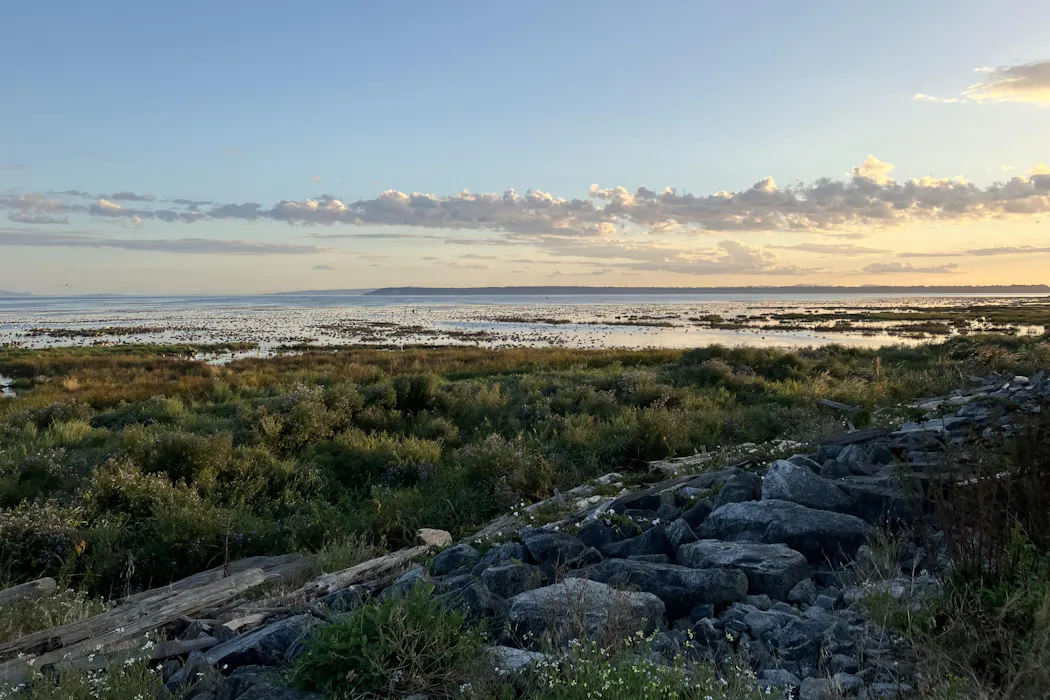
 Sunset along the northern shores of Boundary Bay in Delta, B.C., home to nutrient-rich mudflats that provide vital energy for marine life, in September, 2025.
(Peter Thompson), CC BY
New research finds few improvements for British Columbia’s endangered wildlife
Published: April 19, 2026 1.59pm BST
https://theconversation.com/new-research-finds-few-improvements-for-british-columbias-endangered-wildlife-280141
https://theconversation.com/new-research-finds-few-improvements-for-british-columbias-endangered-wildlife-280141
Link copied
Share article
Sunset along the northern shores of Boundary Bay in Delta, B.C., home to nutrient-rich mudflats that provide vital energy for marine life, in September, 2025.
(Peter Thompson), CC BY
New research finds few improvements for British Columbia’s endangered wildlife
Published: April 19, 2026 1.59pm BST
https://theconversation.com/new-research-finds-few-improvements-for-british-columbias-endangered-wildlife-280141
https://theconversation.com/new-research-finds-few-improvements-for-british-columbias-endangered-wildlife-280141
Link copied
Share article
Share article
Copy link Email Bluesky Facebook WhatsApp Messenger LinkedIn X (Twitter)Print article
British Columbia’s wildlife is in trouble, and governments aren’t working hard enough to keep wild animals and plants alive. How do we know?
Fortunately, the provincial government has long kept extensive records of the animals and plant life that call its lands and waters home. The BC Conservation Data Centre (CDC) holds records for over 25,000 species, ranging from mosses to mackerel and mountain goats.
The status of each species is assessed by scientists to determine the risk that a species will go extinct or be extirpated from the province.
The results of these fine-grained status assessments help divide all of B.C.’s wildlife into one of three lists representing their level of endangerment: “Red” for critically imperilled species, “Blue” for species of special concern and “Yellow” for secure species that are currently at low extinction risk.
The problem is that neither species status assessments nor the colour-coded lists have any legal implications. Even if a species is known to be at high risk of extinction, it’s not guaranteed any protection from the B.C. government.
Colleagues and I used this data to find out how B.C.’s wildlife has been faring under such an uncertain legal landscape. Our recently published study analyzed changes in the province’s conservation database over time. We also explored the nature of these changes.
Genuine vs. non-genuine status changes
As of 2025, B.C. was home to 493 red-listed species and 1,233 blue-listed species — a 25 per cent increase from 2008. However, that increase was largely due to the addition of species, rather than species shifting categories.
Sometimes, the status assessment of a species improves due to the discovery of new information, such as a new population of the species in B.C. that presumably always existed, but was previously unknown.
These changes are still good news — a sign that continuously monitoring wildlife in B.C. is paying dividends — but they don’t actually represent an improvement in the species’ true status on the ground.
 A black-necked stilt in May 2022. The bird, which breeds in British Columbia, remains on the province’s endangered species list.
THE CANADIAN PRESS/Peter Thompson
A black-necked stilt in May 2022. The bird, which breeds in British Columbia, remains on the province’s endangered species list.
THE CANADIAN PRESS/Peter Thompson
Using the comments provided with each listing change, we separated these “non-genuine” status changes from the “genuine” status changes that actually reflected shifts in population size, range size within the province or the intensity of threats.
The data show that almost all of B.C.’s endangered wildlife are not recovering quickly enough, if at all. Out of the thousands of species in the CDC database, of which hundreds are red- or blue-listed, only 14 moved down the ranks of endangerment (from red to blue, or blue to yellow) between 2008 and 2025 for genuine reasons.
That means that every other species is either inching even closer to the brink of extinction than they previously were, or has simply stayed at the same risk level. The latter situation was much, much more common, with only 18 per cent of species exhibiting any sort of change at all.
We found that the vast majority of these changes were non-genuine, arising from the discovery of additional populations, changes to assessment criteria or taxonomic “lumps” and “splits” that changed the definition of what constitutes a species.
These results point to an undeniable fact: if a species was on the red list in 2008, a category reserved for species in desperate need of our help, it is probably still there today.
Jump-starting endangered species recovery
 The hairy woodpecker is one of only 14 species that saw genuine improvement in their status on British Columbia’s list of endangered species.
THE CANADIAN PRESS/Peter Thompson
The hairy woodpecker is one of only 14 species that saw genuine improvement in their status on British Columbia’s list of endangered species.
THE CANADIAN PRESS/Peter Thompson
Mechanisms for protecting endangered wildlife do exist, but they leave significant gaps in the system. For example, B.C.’s Wildlife Act only affords protection to four species, and Canada’s Species at Risk Act only applies to federal land, which only covers one per cent of B.C.
One solution to the problems facing many red- and blue-listed species in B.C. is to expand provincial species-at-risk legislation to species and areas that are not currently protected.
New laws could fill gaps left by the federal Species at Risk Act and B.C.’s Wildlife Act by applying similar provisions against harming endangered wildlife or destroying their habitat. This solution would provide species an important safety net against resource extraction and habitat destruction in the province.
The longer the B.C. government waits to implement these changes, the more likely that red-listed species will disappear from the province permanently. With them, the province will lose a part of what makes it beautiful and a part of the natural beauty that has made it Canada’s most biodiverse province.
Even a few simple legal actions at the provincial level would go a long way towards keeping endangered species alive and enriching local ecosystems for future generations.
- Conservation
- Biodiversity
- Endangered species
- British Columbia
- Species at risk
Author
-
 Peter R. Thompson
Postdoctoral Fellow, School of Environmental Science, Simon Fraser University
Disclosure statement
Peter R. Thompson does not work for, consult, own shares in or receive funding from any company or organisation that would benefit from this article, and has disclosed no relevant affiliations beyond their academic appointment.
Partners

Simon Fraser University provides funding as a member of The Conversation CA.
Simon Fraser University provides funding as a member of The Conversation CA-FR.
View all partners
DOI
https://doi.org/10.64628/AAM.f5mv5fcxq
Events
Jobs
-

Research Assistant, Energy Storage
-
Executive Director, Future Students | UTS College
-
Research Assistant
-
Visiting Professor - 2027 Australia-Korea Chair in Australian Studies at Seoul National University




- Editorial Policies
- Community standards
- Republishing guidelines
- Analytics
- Our feeds
- Get newsletter
- Who we are
- Our charter
- Our team
- Partners and funders
- Resource for media
- Contact us
-
-
-
-
Copyright © 2010–2026, The Conversation