- News
- UK
- Home News
People in the UK are set to spend an average of 4.7 years of their waking lives using their phones unintentionally, study finds
Rebecca Whittaker Wednesday 03 June 2026 00:01 BST- Bookmark
- CommentsGo to comments
Bookmark popover
Removed from bookmarks
Close popoverSocial media ban for under-16s rejected after Commons vote
Get the free Morning Headlines email for news from our reporters across the world
Sign up to our free Morning Headlines email
Sign up to our free Morning Headlines email
Email*SIGN UPI would like to be emailed about offers, events and updates from The Independent. Read our Privacy notice
A self-confessed phone addict, who spends eight hours of her day on her phone, has admitted to feeling panicky and anxious at the thought of being uncontactable or unable to scroll.
Charlotte Graham from Lancashire, runs her own social media and marketing company but her excessive phone use seeps into personal time.
The mother-of-three, 41, said she feels “a bit sick” when her phone notifies her just how many hours she has spent glued to her phone screen.
“I can get up to eight hours a day - it’s easy to spend an hour doom scrolling in the morning and another at night and before you know it it’s eight or nine hours of screen time,” Ms Graham told the Independent.
“I can pick up my phone to check the weather and it turns into Instagram and Instagram turns into reels,” she added.
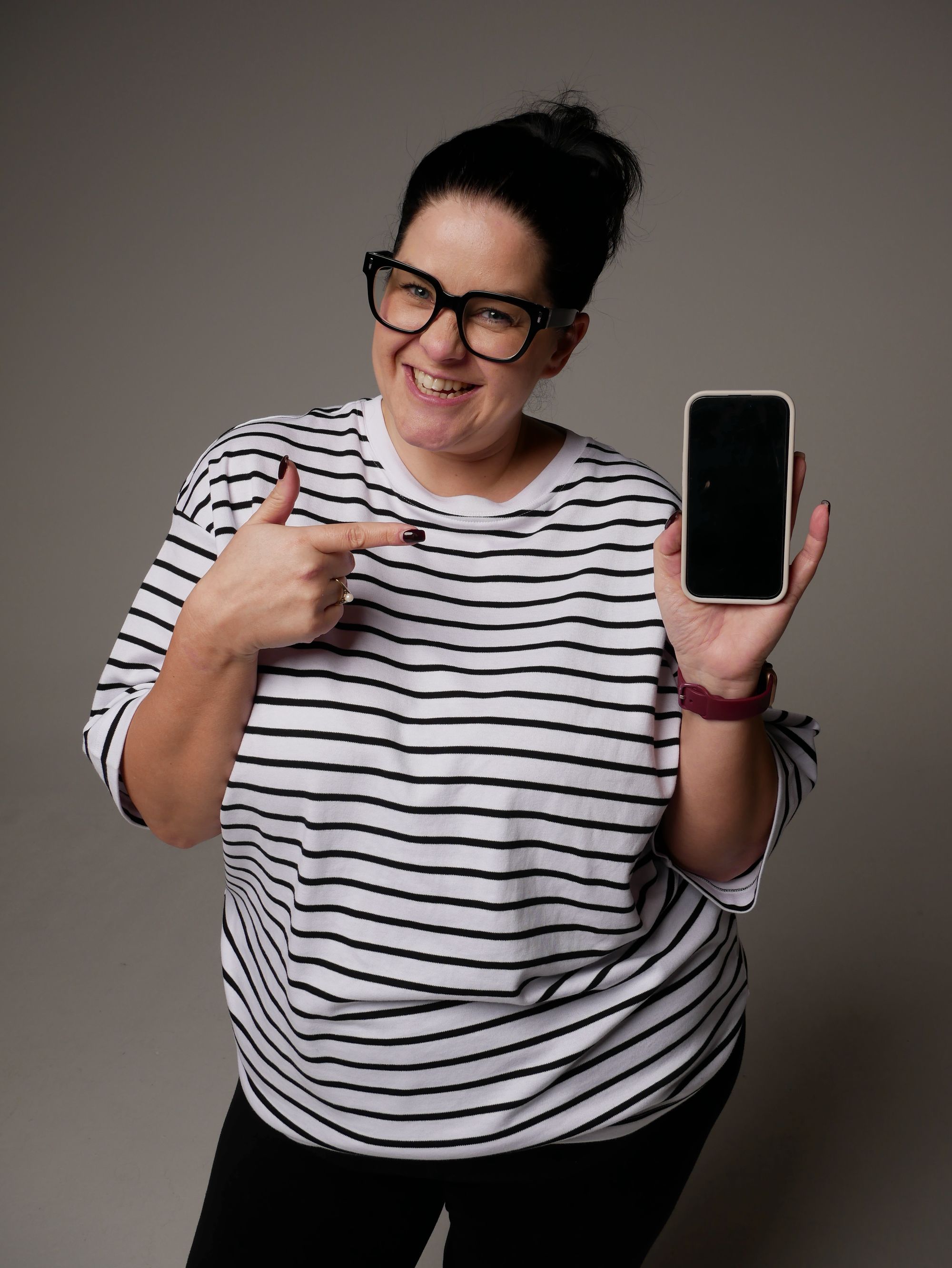 open image in galleryCharlotte Graham, 41, says she finds herself doomscrolling first thing when she wakes up and before she sleeps (Charlotte Graham)
She confessed to having a “meltdown” when she realised there would be no wifi while on holiday in a caravan park with her family. She even considered skipping a networking event once because she was told there would be no internet access.
“I'm not very good at putting my phone on ‘do not disturb’, that gives me anxiety. I have this whole thing about needing to be contactable,” she said.
Ms Graham has tried time limits on social media and an app that grows a tree as an incentive to not pick up her phone, but it hasn’t worked.
It comes as a year-long study by Virgin Media O2 of 6,000 people found people in the UK spend around 1 hour 26 minutes per day doomscrolling or using their phone without an intention.
Over time, this adds up to roughly 523 hours per year, or around 41,000 hours across a lifetime – equivalent to about 1,670 days, or 4.7 years spent using their phone unintentionally.
An estimated 14 million people in the UK spend more than half of their phone time without a clear purpose, affecting their sleep and ability to switch off.
More than four in ten (41 per cent) say willpower alone is not enough to change their behaviour, as one in three (37 per cent) say they are addicted to their devices.
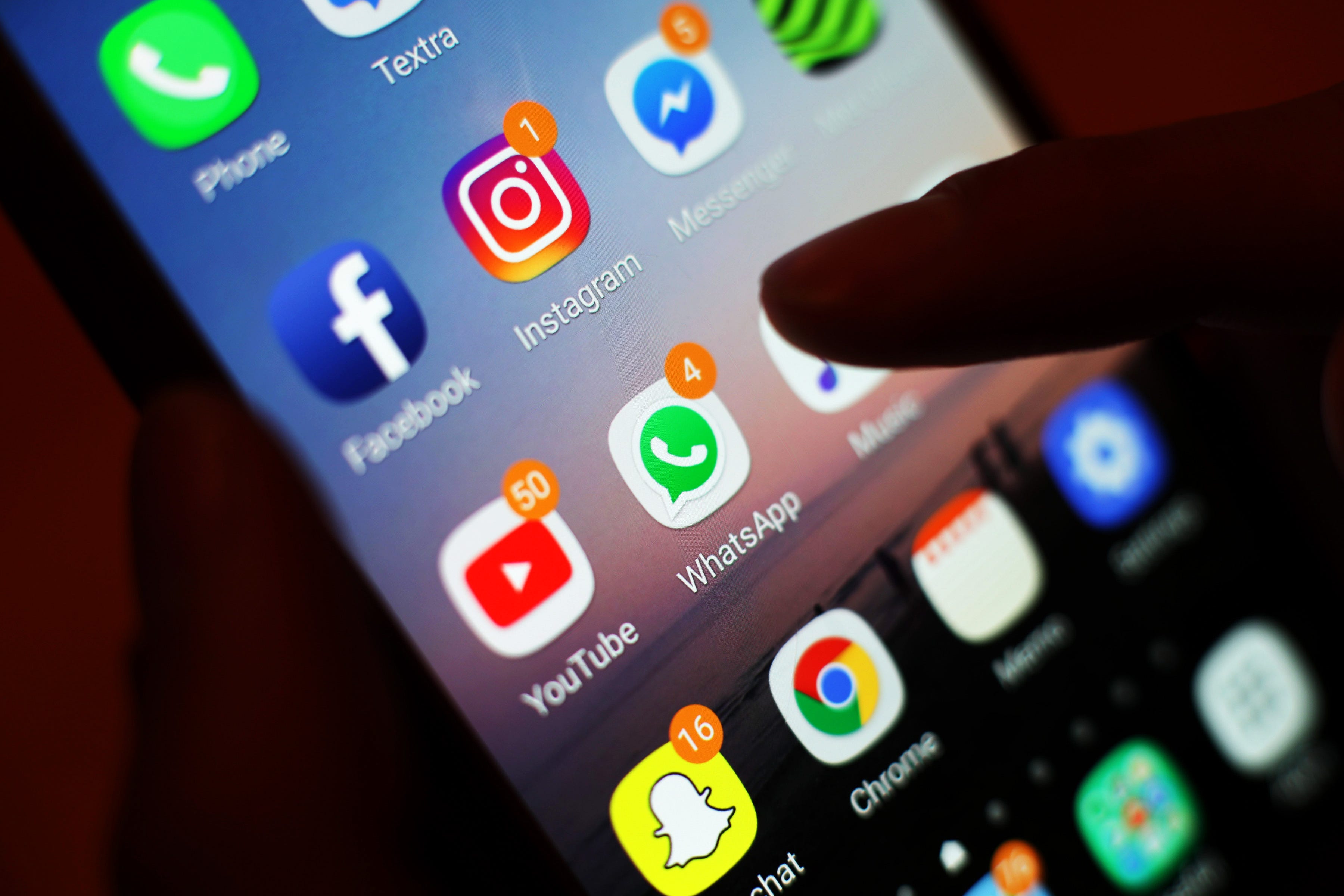 open image in galleryAn estimated 14 million people in the UK spend more than half of their phone time without a clear purpose, study finds (Yui Mok/PA) (PA Wire)
While Ms Graham enjoys social media and doesn't view her phone use entirely negatively, she recognises that checking and scrolling has become habitual and she could never leave it behind when going out.
She said: “I think as an adult, you should be allowed to make your own conscious decisions, but it wouldn't be a bad thing for there to be more awareness and more conversation, certainly around my generation. Social media shouldn't be all consuming, it shouldn't be the only thing that matters.”
As the UK government plans to either ban under-16s accessing social media or impose restrictions on children’s use of those platforms, there have been suggestions digital wellbeing should involve adults too.
Dr Eleanor Drage, Senior Research Fellow at the Leverhulme Centre for the Future of Intelligence at the University of Cambridge, wrote a forward for the study and explained screens have been designed to keep our attention.
“We often find ourselves thinking, I'm checking my email, doing something I have to do, and then you do something completely different,” Dr Drage told the Independent.
“We must have these statistics so that we can go and make technology better. Policies we’ve had around children started with those statistics, and we need to do the same for adults,” she added.
Dana Haidan, Chief Sustainability Officer, Virgin Media O2 said: “The digital debate has centred on screen time alone, with a focus on parents and children. But increasingly the evidence suggests we’re looking at only part of the picture, which is why we’re focusing on digital wellbeing more broadly. Many adults are finding it difficult to switch off, losing sleep to scrolling, struggling to focus, and spending time online in ways they never intended to.
“The answer isn’t blaming individuals or abandoning technology altogether. It’s recognising that healthier digital habits are something we all need to work towards.”
Dr Drage will be tracking how Britons use technologies such as Generative AI, and its effects on health and wellbeing over the next five years as part of a University of Cambridge study funded by Virgin Media O2.
More about
Social MediawellbeingStudyphoneWifiJoin our commenting forum
Join thought-provoking conversations, follow other Independent readers and see their replies
Comments