
- Home
Edition
Africa Australia Brasil Canada Canada (français) Català España Europe France Global Indonesia New Zealand United Kingdom United States Skip to content Edition:
Global
Edition:
Global
- Africa
- Australia
- Brasil
- Canada
- Canada (français)
- Català
- España
- Europe
- France
- Indonesia
- New Zealand
- United Kingdom
- United States
Academic rigour, journalistic flair
 In an inherently social profession, teachers are paradoxically lonely, isolated and strapped for time to collaborate.
THE CANADIAN PRESS/Nathan Denette
In a world divided, teachers need to connect with each other
Published: June 3, 2026 6.29pm BST
https://theconversation.com/in-a-world-divided-teachers-need-to-connect-with-each-other-278936
https://theconversation.com/in-a-world-divided-teachers-need-to-connect-with-each-other-278936
Link copied
Share article
In an inherently social profession, teachers are paradoxically lonely, isolated and strapped for time to collaborate.
THE CANADIAN PRESS/Nathan Denette
In a world divided, teachers need to connect with each other
Published: June 3, 2026 6.29pm BST
https://theconversation.com/in-a-world-divided-teachers-need-to-connect-with-each-other-278936
https://theconversation.com/in-a-world-divided-teachers-need-to-connect-with-each-other-278936
Link copied
Share article
Share article
Copy link Email Bluesky Facebook WhatsApp Messenger LinkedIn X (Twitter)Print article
As an educator, I attest to the remarkable aspects of the teaching profession. Teachers truly have the capacity to be agents for positive change in this troubled world.
That said, a myriad of factors have left the teaching field in a global state of occupational precarity.
Factors include strenuous impacts from the COVID-19 pandemic, inadequate funding and limited resources, escalating school violence, increased public surveillance as well as parental distrust often amplified by social media hostility.
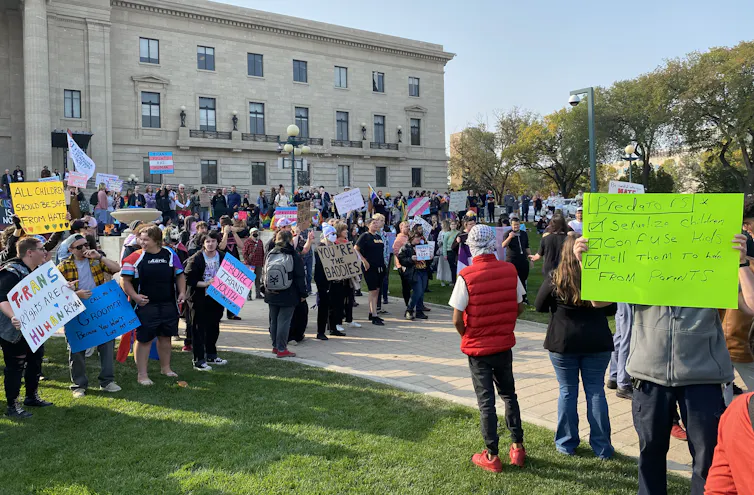 Protesters and counter-protesters face off in front of the Manitoba legislature in Winnipeg, in September 2023. The gathering was one of a series of protests across the country over school policies on gender identity.
THE CANADIAN PRESS/Steve Lambert
Protesters and counter-protesters face off in front of the Manitoba legislature in Winnipeg, in September 2023. The gathering was one of a series of protests across the country over school policies on gender identity.
THE CANADIAN PRESS/Steve Lambert
While teachers’ primary responsibility is to teach, the profession is ever-evolving and more socially complex than is often publicly understood.
Although there has been ample coverage about many of these issues, seldom discussed is how existing school infrastructures constrain collegial practices and contribute to teacher isolation. This was the topic I explored in my award-winning doctoral dissertation.
Wide-ranging tasks
Teachers’ roles and responsibilities are far more expansive than just teaching, but such wide-ranging tasks remain invisible.
In Manitoba, where my study was situated, the provincial government released its teacher competencies regulation in 2025.
This framework mandates teachers to not only lead curricular instruction, but also to safeguard students’ well-being, routinely consult and collaborate with Indigenous communities, participate in peer mentorship and engage in ongoing professional learning — among other diverse occupational responsibilities.
As per Manitoba teachers’ provincial collective agreement, teachers are professionally obligated to routinely participate in school committee work, attend faculty meetings, liaise with parent/community groups and other miscellaneous organizational functions.
These ethical endeavours are corroborated by the Manitoba Teachers’ Society. The union code of professional practice mandates teachers to “[develop] an environment that is free from all forms of discrimination, hate and oppression.”
Teachers’ professional agency
Co-facilitating social justice leadership is increasingly understood to be a responsibility of teachers’ daily practice and professional identity. Whether addressing queerphobia or anti-racism, advancing such efforts are integral to ensuring all students are safe, included and ready to learn.
There is a need for teachers to be able to routinely congregate to engage in communication and dialogue that supports and enacts all their professional obligations. Being able to exercise knowledge and work within cultures grounded in dialogue are essential to promoting teachers’ professional agency.
Yet while teaching is an inherently social enterprise, teachers are infrastructurally siloed. They navigate school systems generally unconducive to collegial leadership practices.
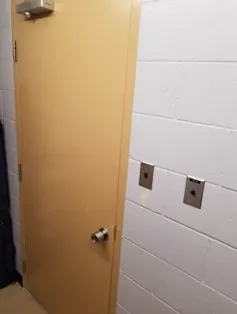 One teacher participant in the author’s study photographed a closed door to symbolize the challenge they faced in advancing social justice efforts.
(Jordan Laidlaw)
One teacher participant in the author’s study photographed a closed door to symbolize the challenge they faced in advancing social justice efforts.
(Jordan Laidlaw)
Manitoba teacher study
There has been ample research documenting the importance of teachers’ collegiality as well as their agency and voice as vehicles to augment professional practice.
As well, researchers like educational theorist Henry Giroux have underscored how teachers’ perspectives as public intellectuals matter for fostering students’ understanding of what it means to live in a democratic society.
But how are teachers able to live these ideas? My study interrogated the ill-defined boundaries of teachers’ professional roles in engaging in broader social justice advocacy through collective school leadership initiatives.
As both a doctoral student and a music teacher, I worked with a seven-person participatory research team of teacher-colleagues. We used the photoVOICE method, which involved documenting our experiences relating to grassroots leadership in our schools through photography and later reflecting upon our perceived impacts and the barriers we encountered. Together, we generated insight about how schools may be consequently improved.
My colleagues participated in tasks including: peer mentorship related to anti-racism education, organizing assemblies and school gender and sexuality alliance groups, designing and facilitating professional development sessions on equity and social justice topics, and inspiring students and colleagues to become involved in local causes.
Read more: Social studies as ‘neutral?’ That’s a myth, and pressures teachers to avoid contentious issues
Teacher-colleagues in my study yearned to professionally connect with one another. They were committed to participating in collective leadership campaigns aimed at cultivating equitable and inclusive school communities. They also reflected on the barriers impeding such work.
Teachers in my study found that engaging in collegial tasks was consistently deferred to lunch hours or after-school meetings. Another barrier was their limited ability to freely express ideas that may enrich or improve schools and students’ lives without fear of penalty.
 One teacher participant in the study led a student writing campaign at the schoolboard about the importance of erecting a permanent Treaty 1 flag at their school.
(Jordan Laidlaw)
One teacher participant in the study led a student writing campaign at the schoolboard about the importance of erecting a permanent Treaty 1 flag at their school.
(Jordan Laidlaw)
Constraints they perceived in being able to publicly express dissenting opinions led them to withdraw and feel demoralized. Self-censorship and fear of reprimand also contributed to their hesitance to collaborate on or support initiatives.
It is clear that teachers are expected to engage in highly social, interactional and equity-seeking tasks both in- and outside classrooms, but there are gaps that can prevent them from fulfilling these functions.
Circumventing structures
Being isolated is exacerbated in my field of music teaching, as many music teachers often serve as the sole instructor in their school community.
These tensions can be circumvented, however. My teaching practice has benefited from collaborations with community musicians, including ongoing projects with an Elder to support Indigenous ways of knowing and music-making, and a tabla instructor to support a large demographic of South-Asian students.
These experiences have led to my own professional growth, enhanced morale, new friendships and greater student engagement and learning.
Cultures of collaboration
As our society navigates post-pandemic occupational burnout and strenuous social tensions, it is time to re-imagine our school structures to be better conducive to collaboration.
Teachers need more scheduled time to liaise with their peers. They need to be able to participate in professional and reflective dialogue, collaborate on larger school functions outside the classroom, and exercise their informed professional perspectives without fear of reprisal.
At the grassroots level, school principals should encourage teachers to seek new professional learning communities, network with mentors and/or mentees and participate in professional peer dialogue.
The world is changing, the socio-emotional needs of students are increasingly complex and the teaching profession is also changing. No individual leader can address all of these interconnected social challenges facing schools.
Rather, there is power in the collective. We need to reduce workplace isolation to support teachers’ collegial capacity to mitigate loneliness, bolster engagement and professional learning, and contribute to more socially just and equitable school environments.
- Teachers
- school equity
- teacher labour
Author
-
 Jordan Laidlaw
Ph.D. student, Educational Administration, University of Manitoba
Disclosure statement
Jordan Laidlaw does not work for, consult, own shares in or receive funding from any company or organisation that would benefit from this article, and has disclosed no relevant affiliations beyond their academic appointment.
Partners

University of Manitoba provides funding as a founding partner of The Conversation CA.
University of Manitoba provides funding as a member of The Conversation CA-FR.
View all partners
DOI
https://doi.org/10.64628/AAM.my99eavue
Events
Jobs
-

Deputy Editor, Arts and Culture
-
Forensicare Postdoctoral Research Fellow/Research Fellow
-
Police Cadet, South Australia Police


- Editorial Policies
- Community standards
- Republishing guidelines
- Analytics
- Our feeds
- Get newsletter
- Who we are
- Our charter
- Our team
- Partners and funders
- Resource for media
- Contact us
-
-
-
-
Copyright © 2010–2026, The Conversation