
- Pro
Humanoid robots hype; specialized machines win factories
When you purchase through links on our site, we may earn an affiliate commission. Here’s how it works.
 (Image credit: Getty Images)
- Copy link
- X
- Threads
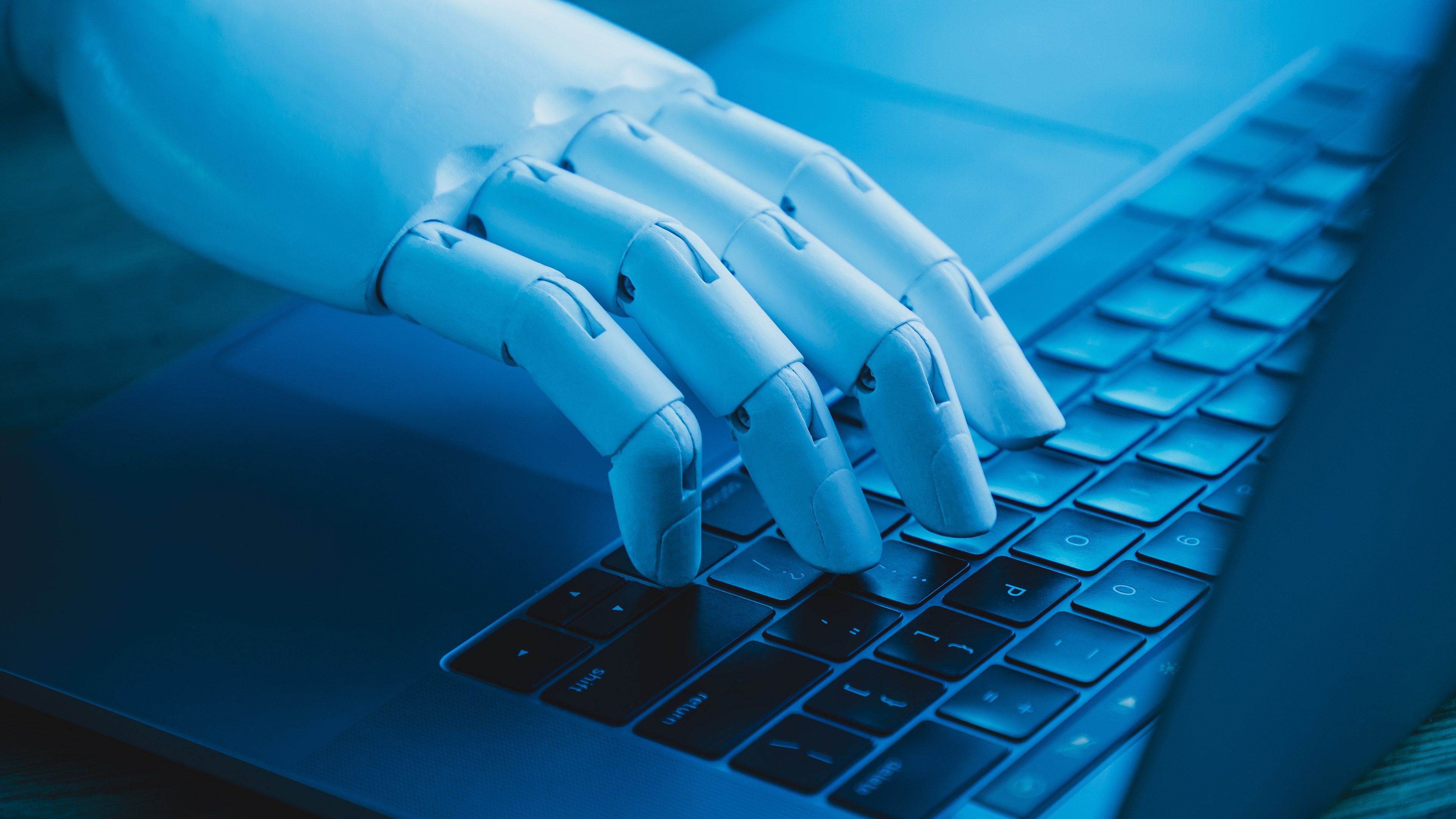
Elon Musk said that humanoid robots will push Tesla’s market value to $25 trillion. He also believes that they will reshape labor.
No longer will humans need to do dangerous, repetitive, or mundane things.
It’s a compelling vision. Yet the reality is likely far more nuanced.
Latest Videos FromWatch full video here: Sviat DulianinovSocial Links Navigation
CEO of Bright Machines.
My take is that the future of robotics in the industrial environment won’t look like us.
Rather, it will involve systems that are built to solve specific, high-value problems with speed, accuracy, and reliability.
You may like-
 Nvidia, Unitree, and Sharpa are making the most capable humanoid robots yet
-
 Physical AI: The Next Great Manufacturing Shift
-
 Before The Matrix and The Terminator, there was 'The Creation of the Humanoids' — how an obscure 1962 B-movie set the scene for robot takeover and introduced the concept of centralized intelligence
The Humanoid Hype Deserves Scrutiny
Morgan Stanley forecasts the humanoid robot market will reach $5 trillion by 2050, with over a billion units deployed — roughly 90% for industrial and commercial use. But even that bullish projection comes with significant caveats: major advances in hardware, materials, and AI are required before humanoids can scale in industrial settings.
Then there is economics. Humanoids currently cost up to $200,000 per unit. At that price point, achieving ROI is extremely difficult given their still-limited capabilities.
Are you a pro? Subscribe to our newsletterContact me with news and offers from other Future brandsReceive email from us on behalf of our trusted partners or sponsorsBy submitting your information you agree to the Terms & Conditions and Privacy Policy and are aged 16 or over.Precision is an even bigger obstacle. Manufacturing has zero tolerance for error. Research from the IEEE illustrates the challenge: even folding laundry remains surprisingly unreliable for robots.
Translating meaningful dexterity into high-speed industrial workflows is a far steeper climb. And for many tasks — like driving a screw to mount a heat sink on a motherboard — a humanoid is simply overkill. A robotic arm, a screwdriver, and a smart navigation system will do the job better.
Manufacturing at the Edge: A Model that Actually Works
The traditional manufacturing model is based on a labor-first approach. An example is Foxconn, which employs around a million workers. Usually, these workers solve problems before considering automation systems.
What to read next-
 What the UK’s robot anxiety reveals about how automation will scale
-
 Gartner: Robots to lead operations in half of new warehouses by 2030
-
 The rise of the silver collar workforce
True, this can work at scale, but it also has limitations with flexibility, consistency, and speed.
But manufacturing at the edge flips that equation. Instead of being produced in distant locations, production moves closer to where products are deployed. This allows for faster iteration, reduced logistics complexity, and greater responsiveness to demand.
From there, the model becomes about being technology-first. From the start, challenges are addressed with software, robotics, automation, real-time data, and AI. Think of it as “manufacturing in a box.”
Employees are still critical for this process, but they have a different role. They oversee operations, handle exceptions, and manage continuous improvement along with AI agents. Robots, on the other hand, focus on repetitive, precision-driven tasks and processes.
Manufacturing at the edge does not have to be monolithic. It can range from a warehouse, data center, or compact production facility. But instead of sprawling facilities, the footprints are generally smaller, say 50,000 to 100,000 square feet.
The benefits are clear: higher throughput, improved quality, faster time to market, and greater consistency. Manufacturing at the edge is also more cost-effective. This makes it easier to justify the onshoring of manufacturing.
The past few years have shown the importance of this. With COVID and geopolitical tensions, manufacturing on the edge offers a path to more resilient, localized production.
Applying AI to the Right Problem is the Real Differentiator
Building an AI-powered manufacturing environment is fundamentally different from traditional automation. It centers on flexibility. Manufacturing is dynamic as designs and capacity needs change, processes evolve, and systems must adapt without introducing friction or downtime.
This is why AI is so important, and why no single model can do it alone. A large language model might grab the headlines, but real-world systems draw on the full depth of AI — from classical machine learning for optimization, to deep learning for vision and perception, to generative AI for orchestration and insight. The power isn't in any one technique — it's in how they work together.
Another critical factor is knowing what should or should not be automated. Machines are ideal for consistency and repetition, while humans are adept at judgment, adaptability, and problem-solving.
In fact, AI can greatly empower operators. This can be done by providing real-time recommendations, visibility into system performance, and tools to continuously refine workflows. Humans remain firmly in the loop, overseeing operations, handling exceptions, and managing repair and optimization.
The Robot Manufacturing Transformation is Underway
The robots that will reshape manufacturing won't walk on two legs. They'll be purpose-built machines running sophisticated AI, operating in compact and efficient facilities, augmenting skilled workers rather than fully replacing them.
The future of industrial automation isn't about replicating humans. It's about combining specialized machines, intelligent software, and human judgment to solve complex problems — faster, better, and at scale.
That transformation is underway. And it looks nothing like what Hollywood imagined.
We list the best Robotic Process Automation software.
This article was produced as part of TechRadar Pro Perspectives, our channel to feature the best and brightest minds in the technology industry today.
The views expressed here are those of the author and are not necessarily those of TechRadarPro or Future plc. If you are interested in contributing find out more here: https://www.techradar.com/pro/perspectives-how-to-submit
TOPICS AI Sviat DulianinovSocial Links NavigationCEO of Bright Machines.
View MoreYou must confirm your public display name before commenting
Please logout and then login again, you will then be prompted to enter your display name.
Logout Read more
AI Platforms & Assistants
Nvidia, Unitree, and Sharpa are making the most capable humanoid robots yet
Pro
Physical AI: The Next Great Manufacturing Shift
Pro
Before The Matrix and The Terminator, there was 'The Creation of the Humanoids' — how an obscure 1962 B-movie set the scene for robot takeover and introduced the concept of centralized intelligence
Pro
What the UK’s robot anxiety reveals about how automation will scale
Pro
Gartner: Robots to lead operations in half of new warehouses by 2030
Pro
The rise of the silver collar workforce
Latest in Pro
 Pro
Ring has been collecting visitor's facial biometrics without consent, class action lawsuit alleges
Pro
Ring has been collecting visitor's facial biometrics without consent, class action lawsuit alleges
 Pro
Meta's AI Business Agent is a small and medium businesses guru – and it is now available directly through WhatsApp
Pro
Meta's AI Business Agent is a small and medium businesses guru – and it is now available directly through WhatsApp
 Security
‘Data can place the lives of frontline military or other personnel at risk’: FBI warns that China is luring Western military and intelligence operatives with 'gig-work' job offers to steal secrets
Security
‘Data can place the lives of frontline military or other personnel at risk’: FBI warns that China is luring Western military and intelligence operatives with 'gig-work' job offers to steal secrets
 Pro
How AI and advanced technologies will change the roles of supply chain workers of the future
Pro
How AI and advanced technologies will change the roles of supply chain workers of the future
 Pro
What are MEMS – and how they change your world: from computers to speakers
Pro
What are MEMS – and how they change your world: from computers to speakers
 Pro
In the AI era, is Shopify the new WordPress?
Latest in Opinion
Pro
How AI and advanced technologies will change the roles of supply chain workers of the future
Pro
What are MEMS – and how they change your world: from computers to speakers
Pro
In the AI era, is Shopify the new WordPress?
Pro
In the AI era, is Shopify the new WordPress?
Latest in Opinion
Pro
How AI and advanced technologies will change the roles of supply chain workers of the future
Pro
What are MEMS – and how they change your world: from computers to speakers
Pro
In the AI era, is Shopify the new WordPress?
 Pro
The 5 common mistakes enterprises make when choosing AI tools (and how to avoid them)
Pro
The 5 common mistakes enterprises make when choosing AI tools (and how to avoid them)
 Pro
The waitlist is not the control: Why frontier cyber AI needs business-side guardrails
Pro
The waitlist is not the control: Why frontier cyber AI needs business-side guardrails
 Pro
A live operational risk: Why AI agents are outrunning your security
LATEST ARTICLES
Pro
A live operational risk: Why AI agents are outrunning your security
LATEST ARTICLES- 1‘We now own the IP’: 007 First Light sequels could face new villain as Amazon Gaming says it might publish future Bond games
- 2Best monitors of Computex 2026: top new displays you need to know about
- 3I played four hours of Ace Combat 8, and now I feel like a real fighter pilot
- 4When might Toy Story 5 be released on Disney+? Here's what we predict
- 5Ring has been collecting visitor's facial biometrics without consent, class action lawsuit alleges