- Pro
We round up some of the other major news from Microsoft Build 2026
When you purchase through links on our site, we may earn an affiliate commission. Here’s how it works.
 (Image credit: Future / Mike Moore)
- Copy link
- X
- Threads
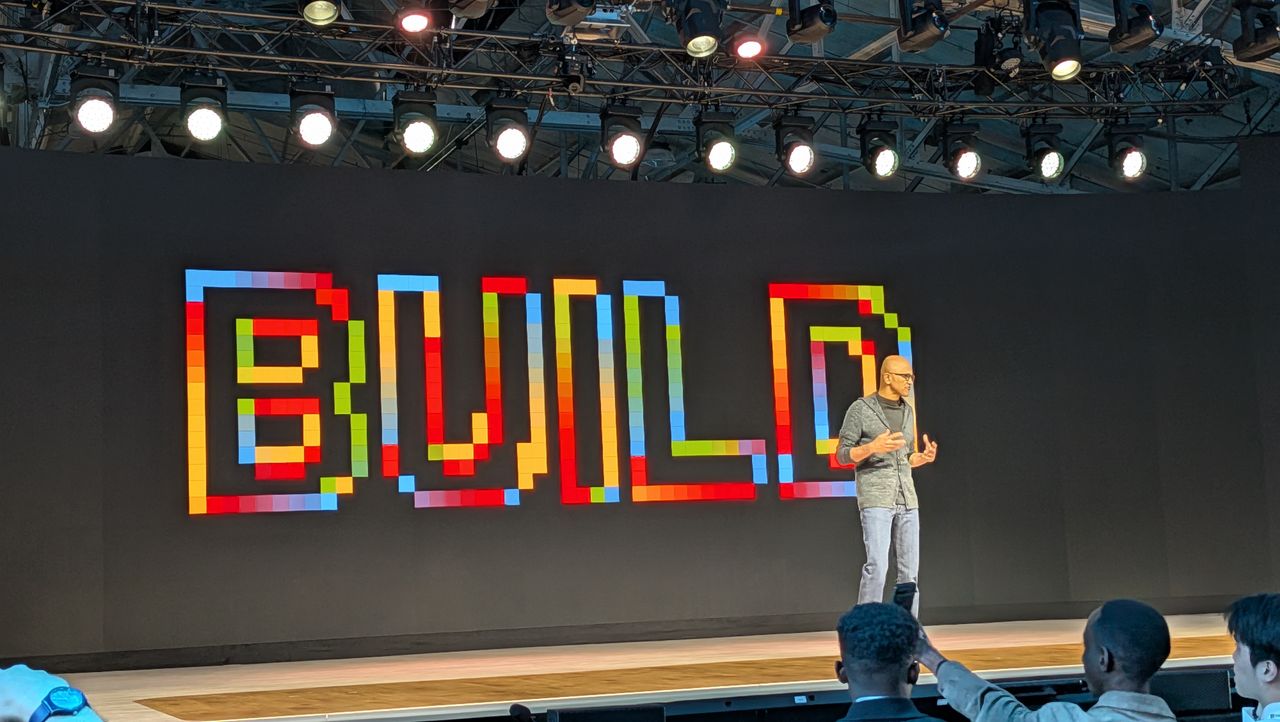
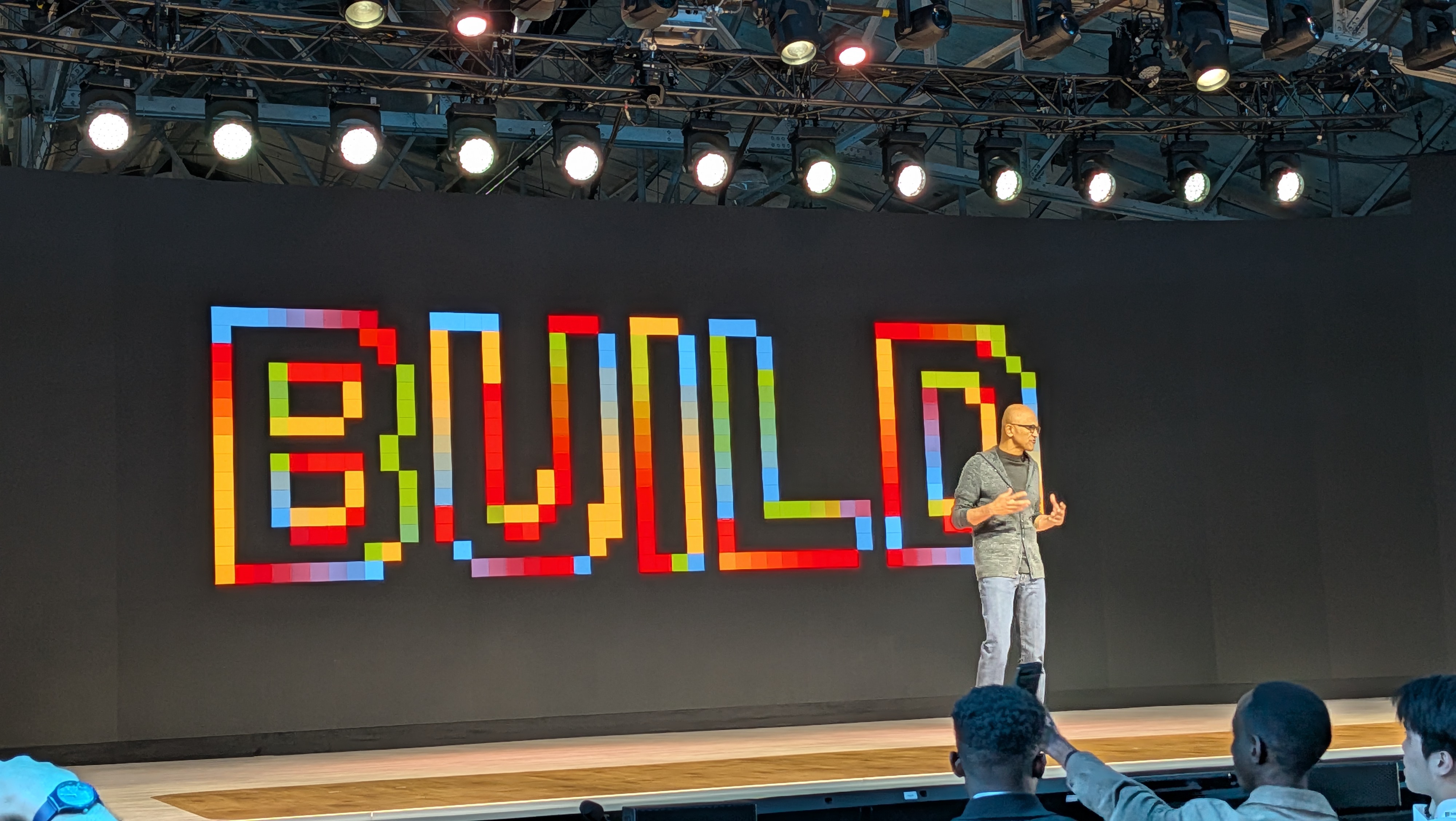
I've been out at Microsoft Build 2026 this week, where the event was dominated by headline-grabbing platform announcements and AI demonstrations.
However, there were also a number of smaller disclosures, roadmap updates, and technical previews may prove just as consequential over the next several years.
Below are four announcements that deserve a closer look.
Latest Videos FromWatch full video here:
MAI-Thinking-1 shows push toward first-party Frontier models
Somewhat lost amid the broader discussion about AI agents was Microsoft's introduction of MAI-Thinking-1, a new reasoning-focused model that represents a significant strategic shift for the company. The model reportedly features 35 billion parameters and a 128K context window, positioning it for complex coding, analysis, and multi-step reasoning tasks.
For developers, the announcement is notable not because Microsoft is entering the model race - it's already deeply involved in AI infrastructure, but because it suggests a growing emphasis on owning more of the AI stack. Rather than serving solely as a platform provider for third-party models, Microsoft appears increasingly interested in delivering differentiated models optimized for its own developer ecosystem.
You may like-
 Microsoft Build 2026 — all the news and updates as it happened
-
 From code-first to intent-first: Microsoft Build 2026 could be the end of programming as we know it
-
 10 products that launched at Microsoft Build — and what happened to them
The practical implications could be substantial. A Microsoft-controlled reasoning model can be tuned specifically for GitHub, Azure, Windows AI workloads, and enterprise governance requirements. It also gives Microsoft greater control over deployment, cost structures, and roadmap priorities.
While Build featured no shortage of agent-related announcements, MAI-Thinking-1 may ultimately prove one of the conference's most strategically important developments.
Are you a pro? Subscribe to our newsletterContact me with news and offers from other Future brandsReceive email from us on behalf of our trusted partners or sponsorsBy submitting your information you agree to the Terms & Conditions and Privacy Policy and are aged 16 or over.Microsoft Execution Containers bring security boundaries to AI workloads
One of the most technically significant announcements at Build 2026 may have been the introduction of Microsoft Execution Containers (MXC), a new security architecture designed to provide device-level guardrails for AI systems. While less visible than end-user AI features, MXC addresses one of the industry's biggest unresolved questions: how to safely run increasingly capable AI workloads.
According to Microsoft, the technology is intended to isolate AI processes and enforce security boundaries around model execution. As organizations deploy AI systems with access to enterprise data, code repositories, and operational workflows, traditional application security models become increasingly difficult to apply.
MXC appears designed to create a controlled execution environment where permissions, data access, and system interactions can be monitored and constrained. For regulated industries, this could become a foundational requirement for broader AI adoption.
What to read next-
 Windows 12 at Build 2026: What to expect
-
 10 free Microsoft Build sessions you should absolutely attend to see AI's future
-
 50 Microsoft tools you can use for free just in time for Build 2026
The announcement also reflects a broader trend emerging across Build 2026. Microsoft's messaging was not solely about making AI more capable; it was equally focused on making AI more governable. In that context, execution security may become just as important as model performance.
Windows is becoming a more serious AI and developer platform
Several Build announcements highlighted Microsoft's ongoing effort to transform Windows into a first-class platform for AI development, as the company outlined new developer capabilities, expanded local AI infrastructure, and deeper support for running AI workloads directly on Windows devices.
A particularly interesting aspect of the announcement was Microsoft's continued investment in Windows AI Foundry and local model execution. The company emphasized support for running models across CPUs, GPUs, and NPUs, allowing developers to target a wider range of hardware configurations while maintaining a consistent development experience.
The event also showed a more developer-centric Windows experience, including enhanced command-line tooling, Linux-oriented workflows, and new AI-assisted development capabilities integrated directly into the operating system.
Taken together, these updates seem to suggest Microsoft increasingly views Windows not simply as an endpoint for AI applications but as a primary development and deployment environment. For developers building local or hybrid AI systems, that distinction could become increasingly important over the next several years.
Quantum Computing is still a major Microsoft focus
Although Build 2026 was overwhelmingly focused on AI, Microsoft also used the conference to spotlight progress in quantum computing through its Majorana 2 chip program. The company said the latest advances deliver qubits that are significantly more accurate than previous approaches, supporting its long-term ambition of reaching commercially useful quantum systems later this decade.
For software developers, the announcement was less about immediate deployment and more about platform direction. Microsoft has spent years building quantum development tools, simulators, and cloud-based experimentation environments. Improved hardware milestones make those investments increasingly relevant.
The timing is also notable, as AI workloads continue to drive demand for computing power, major technology vendors are simultaneously exploring entirely new computational architectures. Quantum computing remains experimental, but Microsoft appears determined to maintain a position at the forefront of the field.
While most Build attendees were understandably focused on AI agents, cloud infrastructure, and developer tooling, the quantum update served as a reminder that Microsoft's roadmap extends well beyond the current AI cycle.

Follow TechRadar on Google News and add us as a preferred source to get our expert news, reviews, and opinion in your feeds.
TOPICS Microsoft AI CATEGORIES AI Platforms & Assistants Mike MooreSocial Links NavigationDeputy Editor, TechRadar Pro
Mike Moore is Deputy Editor at TechRadar Pro. He has worked as a B2B and B2C tech journalist for nearly a decade, including at one of the UK's leading national newspapers and fellow Future title ITProPortal, and when he's not keeping track of all the latest enterprise and workplace trends, can most likely be found watching, following or taking part in some kind of sport.
View MoreYou must confirm your public display name before commenting
Please logout and then login again, you will then be prompted to enter your display name.
Logout Read more
Pro
From code-first to intent-first: Microsoft Build 2026 could be the end of programming as we know it
Pro
10 products that launched at Microsoft Build — and what happened to them
Pro
Windows 12 at Build 2026: What to expect
Pro
10 free Microsoft Build sessions you should absolutely attend to see AI's future
Pro
50 Microsoft tools you can use for free just in time for Build 2026
 Pro
16 years of Microsoft Build: A timeline of key announcements, panels, and sessions
Latest in Pro
Pro
16 years of Microsoft Build: A timeline of key announcements, panels, and sessions
Latest in Pro
 Software & Services
DaVinci Resolve 21 (2026) review
Software & Services
DaVinci Resolve 21 (2026) review
 Pro
‘This is a fundamental shift in how we prepare for pandemics’: Researchers used AI and known genetic codes to develop a ‘fundamentally new’ vaccine that ‘could help speed up the roll out vaccines to benefit people all over the world’
Pro
‘This is a fundamental shift in how we prepare for pandemics’: Researchers used AI and known genetic codes to develop a ‘fundamentally new’ vaccine that ‘could help speed up the roll out vaccines to benefit people all over the world’
 Pro
‘Our hardware is designed to be picked up and shaken about’: Aquark Technologies takes quantum sensing outside of the lab as a viable GNSS alternative
Pro
‘Our hardware is designed to be picked up and shaken about’: Aquark Technologies takes quantum sensing outside of the lab as a viable GNSS alternative
 Pro
Why everyday Workplace Tech Frustration is hybrid work's biggest unsolved problem
Pro
Why everyday Workplace Tech Frustration is hybrid work's biggest unsolved problem
 Security
Hackers abused Stripe and Google Tag Manager to launch a credit card theft campaign and host stolen payment details
Security
Hackers abused Stripe and Google Tag Manager to launch a credit card theft campaign and host stolen payment details
 Security
'Fraud won’t be tolerated in this country any longer': FBI releases Most Wanted Fraudsters list to help fight the crime that 'costs Americans tens of billions of dollars every year'
Latest in Features
Pro
‘Our hardware is designed to be picked up and shaken about’: Aquark Technologies takes quantum sensing outside of the lab as a viable GNSS alternative
Security
'Fraud won’t be tolerated in this country any longer': FBI releases Most Wanted Fraudsters list to help fight the crime that 'costs Americans tens of billions of dollars every year'
Latest in Features
Pro
‘Our hardware is designed to be picked up and shaken about’: Aquark Technologies takes quantum sensing outside of the lab as a viable GNSS alternative
 Speakers
High End Vienna 2026 Best in Show awards: our favorite 11 speakers, streamers and more
Speakers
High End Vienna 2026 Best in Show awards: our favorite 11 speakers, streamers and more
 Tech
ICYMI: the week's 7 biggest tech news stories, from Android to Lego
Tech
ICYMI: the week's 7 biggest tech news stories, from Android to Lego
 Health & Fitness
I've been using Google Health's new AI Coach for a week — here's 3 things I liked about the Fitbit Premium revamp (and 2 I really didn't)
Health & Fitness
I've been using Google Health's new AI Coach for a week — here's 3 things I liked about the Fitbit Premium revamp (and 2 I really didn't)
 Blu-ray
Here are the 4 new 4K Blu-rays I'm most excited to test in June 2026
Blu-ray
Here are the 4 new 4K Blu-rays I'm most excited to test in June 2026
 VPN Services
IPVanish servers – all you need to know about the VPN provider's network
LATEST ARTICLES
VPN Services
IPVanish servers – all you need to know about the VPN provider's network
LATEST ARTICLES- 1How to watch USA vs Germany: Free Streams & TV Guide for World Cup 2026 warm-up
- 2How to watch Portugal vs Chile: Free Streams & TV Channels for World Cup 2026 warm-up match
- 3I've been using Google Health's new AI Coach for a week — here's 3 things I liked about the Fitbit Premium revamp (and 2 I really didn't)
- 4SteelSeries Nimbus Cloud review: more potential than polish
- 5Samsung Galaxy Book6 Enterprise Edition business laptop review