- AI Platforms & Assistants
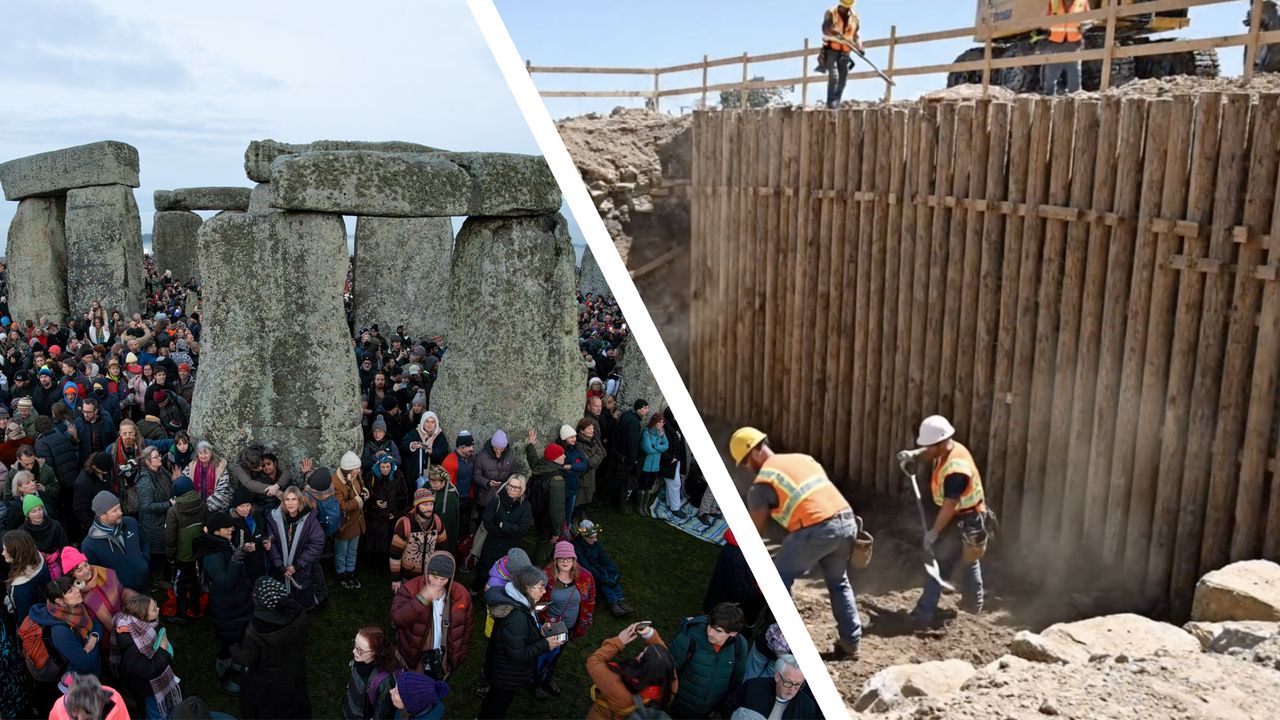
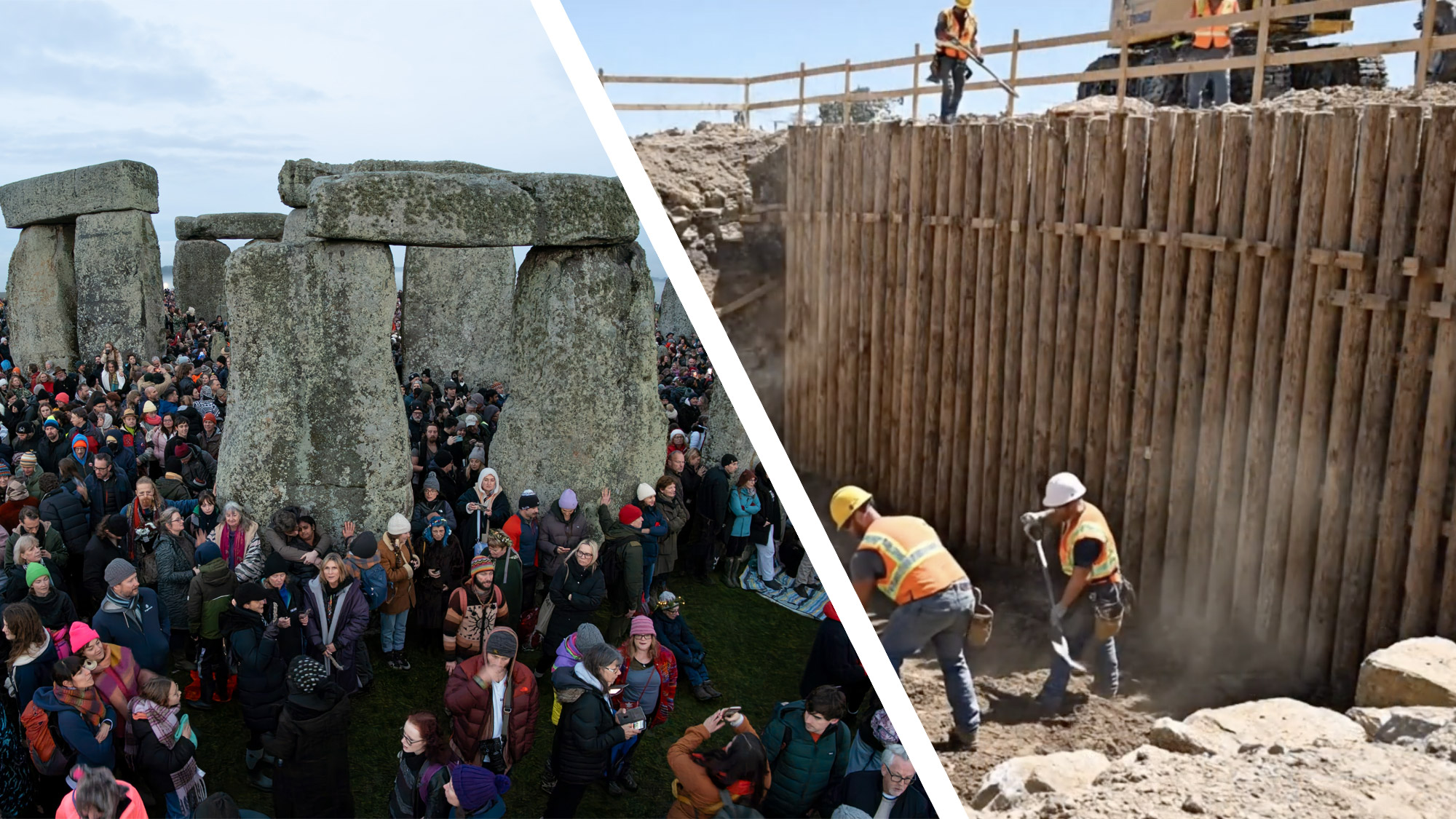
Where did those hard hats come from?!
When you purchase through links on our site, we may earn an affiliate commission. Here’s how it works.
 (Image credit: AI / Getty Images)
- Copy link
- X
- Threads
Sign up for breaking news, reviews, opinion, top tech deals, and more.
Become a Member in Seconds
Unlock instant access to exclusive member features.
Contact me with news and offers from other Future brands Receive email from us on behalf of our trusted partners or sponsors By submitting your information you agree to the Terms & Conditions and Privacy Policy and are aged 16 or over.You are now subscribed
Your newsletter sign-up was successful
Join the club
Get full access to premium articles, exclusive features and a growing list of member rewards.
Explore An account already exists for this email address, please log in. Subscribe to our newsletterAs soon as I flipped the last digital page of my ebook, Ken Follett's Circle of Days, I started my deep digital dive on Stonehenge, one that quickly led me to YouTube. Maybe that was my first mistake.
Stonehenge, the prehistoric World UNESCO Heritage Site, is the subject of Follett's book, and it posits a dramatic narrative around how many experts now believe the iconic edifice was created thousands of years ago. It's a remarkable story, and if you ask AI, it somehow involved guys with hard hats. I kid you not.
Article continues below You may like-
 How does AI video slop get made? I think I finally found out
-
 I think Jia Zhangke’s AI short says something interesting about AI movies
-
 You probably think you can spot an AI fake — research suggests you can’t
 Watch On
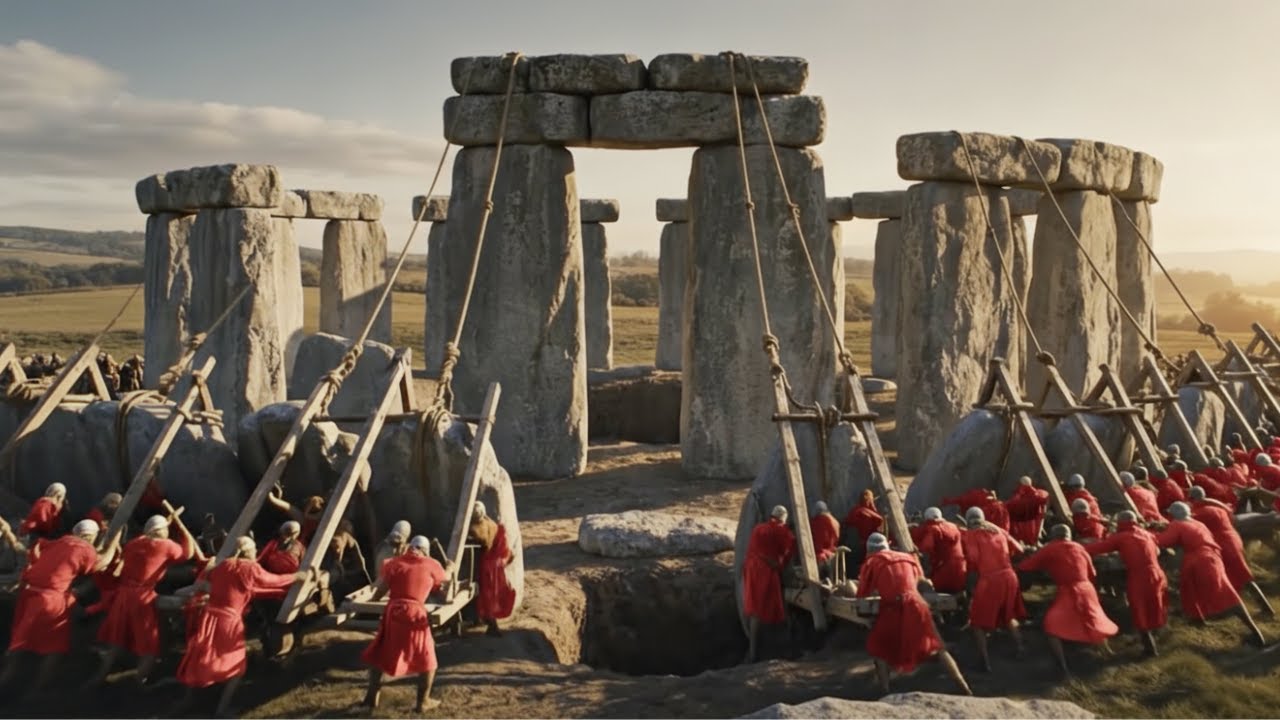
There are clips of thousands digging the initial ditch and using chalk to create the inner and outer bank. So far, so good.
The scene keeps switching through various stages of the build, with a monotone voice narrating each scene, and suddenly we see the moment when a team of workers excavates 56 large pits — and they're all wearing modern hard hats, yellow vests, jeans, and gloves. Oh, and the location inexplicably looks like the present-day interior of the US Capitol-like building in Washington, D.C.
I could almost feel the slippery slide of AI Slop under my feet.
Get daily insight, inspiration and deals in your inboxContact me with news and offers from other Future brandsReceive email from us on behalf of our trusted partners or sponsorsBy submitting your information you agree to the Terms & Conditions and Privacy Policy and are aged 16 or over.Later in the video, as they attempt to explain how these primitive people used wooden sleds to move the giant stones (accurate), the screen switches to workers dragging a gigantic stone away from the pyramids of Egypt.
The video seemed to be transforming from a historical record into a travelogue. Another scene depicts people of India pulling massive ropes tied around another giant, intricately decorated stone — one that bears no resemblance to anything at Stonehenge (or even Easter Island, for that matter).
At another point, we find ourselves somewhere in China, and for the celebrations around the delivery of the stones to the building site, we're transported to a celebration in modern Mexico.
What to read next-
 Is AI music just another anti-tech panic?
-
 Darren Aronofsky’s new YouTube series uses AI video to tell Revolutionary War stories
-
 AI writing's latest patterns and how I avoid them
With all the stones in place, construction is handed back to modern construction workers.
Could I build it better?
Look, the video is a mess, the worst form of AI slop, and fortunately only has about 500 views. Still, it's presented as a history lesson, and that makes me sick.
I have a good idea of how it was made. The 12-minute video is clearly comprised of dozens (if not hundreds) of short AI-generated clips. Each one was based on an inexpertly crafted prompt that often left too much to the AI's imagination. What's even more disturbing is that whoever created this didn't even bother to check their work. They just took all the clips, slapped them together, and posted them on YouTube.
This video, by the way, is just one of many AI-generated history YouTube videos, and some have tens of thousands of views. I can only imagine the junk history that's being fed to unenlightened audiences.
For as disgusted as I was by this twisting of historical fact into AI fantasy, I was curious about the creation process.
I have no information about which tool was used to build this Stonehenge video, but I have an idea. It might might Google Veo 3.1, which can combine audio and video. To test my assumption, I fed Veo this prompt and set the thinking to "Pro" for "Advanced thinking and code with 3.1 Pro":
I want to create a landscape video of the creation of Stonehenge. It should be historically accurate, set it the Neolithic age. Use this image as reference for what the stories should look like. The film should depict transporting the stones on giant wooden sleds along paths lines with logs and branches. It should show how they used tools like flints and antlers to shape the stones and rough-hewn A-frame wooden structures to lifts them into place. Please also include audio narration. Details on the history can be found here https://en.wikipedia.org/wiki/Stonehenge. Set all of it in daytime and make it look photorealistic
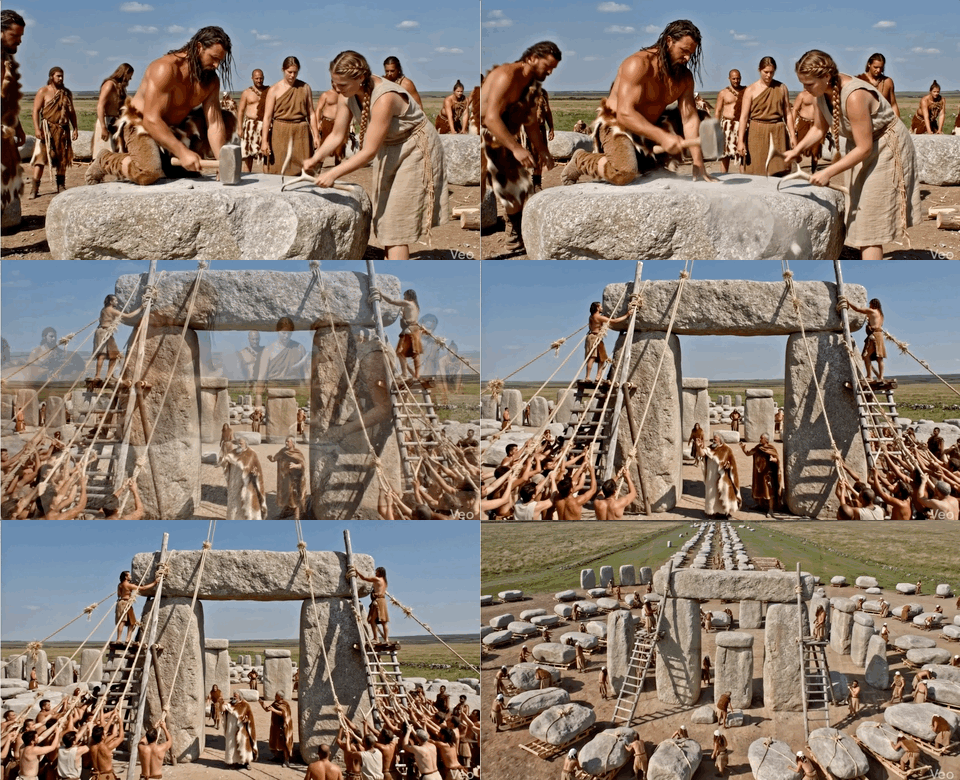
I got a pretty good eight seconds, and I could see how neatly it would slip into the AI video above. My second prompt was less successful. First, it sort of repeated a portion of my first video, and second, it made one giant stone lighter than air. At least I didn't get any hard hats.
Look, I love reading historical fiction, which is called fiction for a reason: it takes the facts and then wraps characters and interpersonal events around them that may or may not have happened, but the thrust is always toward accepted truth: these events happened but the people may not have fought, fallen in love, had that conversation, or lived and died in that way.
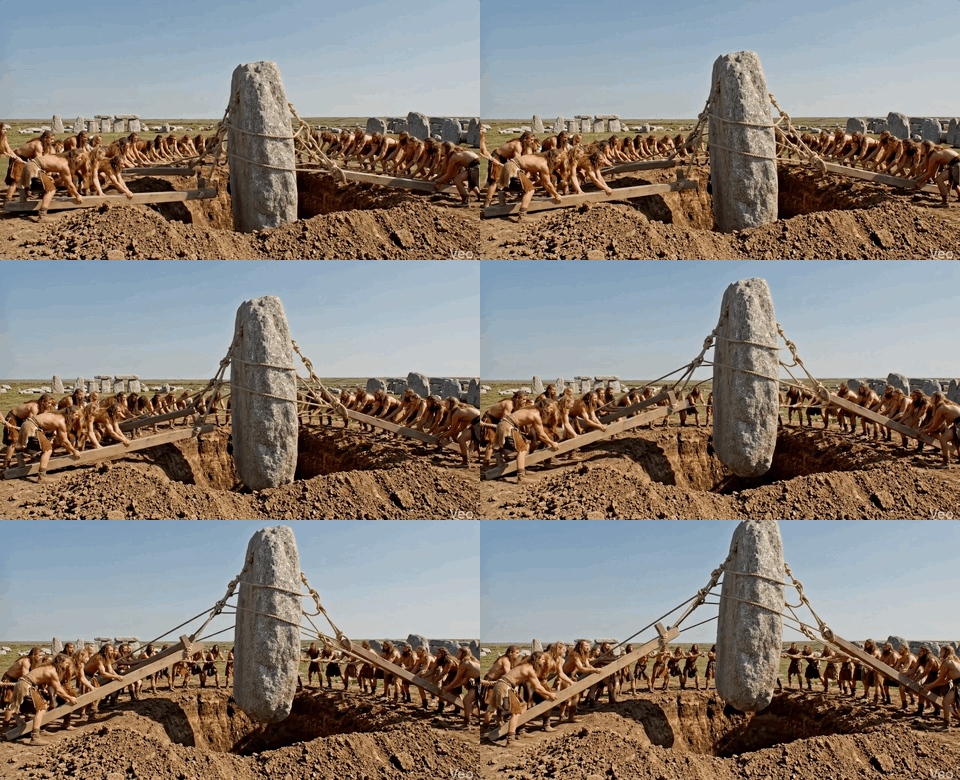
Unlike the novels, though, these "Historical" AI videos are just a mess of barely-understood factoids, outright fantasy, and nonsense. People, places, and time frames are meaningless. AI doesn't know or understand history and is much more interested in completing the prompt. It takes people, places, and things from any era and employs them like puppets to fulfil that effort.
On the other side of this equation are the people building and posting these AI slop videos. They're far more interested in speed and views and the potential for view-based ad revenue they might provide than verisimilitude. YouTube, for its part, appears agnostic about this content. It's served up alongside accurate history videos.
If you, like me, care about history, beware. These "You Are There"-style videos are everywhere, and they can't be trusted to produce accurate views of history, unless, of course, you believe people in hard hats living in China, Mexico, and India somehow worked on Stonehenge in the Neolithic era.

Follow TechRadar on Google News and add us as a preferred source to get our expert news, reviews, and opinion in your feeds.
TOPICS AI YouTube Lance UlanoffSocial Links NavigationEditor At Large
A 38-year industry veteran and award-winning journalist, Lance has covered technology since PCs were the size of suitcases and “on line” meant “waiting.” He’s a former Lifewire Editor-in-Chief, Mashable Editor-in-Chief, and, before that, Editor in Chief of PCMag.com and Senior Vice President of Content for Ziff Davis, Inc. He also wrote a popular, weekly tech column for Medium called The Upgrade.
Lance Ulanoff makes frequent appearances on national, international, and local news programs including Live with Kelly and Mark, the Today Show, Good Morning America, CNBC, CNN, and the BBC.
View MoreYou must confirm your public display name before commenting
Please logout and then login again, you will then be prompted to enter your display name.
Logout Read more
AI Platforms & Assistants
How does AI video slop get made? I think I finally found out
AI Platforms & Assistants
I think Jia Zhangke’s AI short says something interesting about AI movies
AI Platforms & Assistants
You probably think you can spot an AI fake — research suggests you can’t
AI Platforms & Assistants
Is AI music just another anti-tech panic?
AI Platforms & Assistants
Darren Aronofsky’s new YouTube series uses AI video to tell Revolutionary War stories
 AI Platforms & Assistants
An ex-programmer’s devastating take on AI data centers is going viral
Latest in AI Platforms & Assistants
AI Platforms & Assistants
AI writing's latest patterns and how I avoid them
AI Platforms & Assistants
An ex-programmer’s devastating take on AI data centers is going viral
Latest in AI Platforms & Assistants
AI Platforms & Assistants
AI writing's latest patterns and how I avoid them
 Pro
The 1,000 TOPS consumer: Multiple devices could deliver powerful distributed AI capability by 2030
Pro
The 1,000 TOPS consumer: Multiple devices could deliver powerful distributed AI capability by 2030
 AI Platforms & Assistants
ChatGPT was down for many — as OpenAI says it's 'monitoring the recovery'
AI Platforms & Assistants
ChatGPT was down for many — as OpenAI says it's 'monitoring the recovery'
 AI Platforms & Assistants
Humanoid robots beat humans at the Beijing half marathon for the first time
AI Platforms & Assistants
Humanoid robots beat humans at the Beijing half marathon for the first time
 AI Platforms & Assistants
Chrome’s new AI Skills feature turned my prompt idea into a reusable tool
AI Platforms & Assistants
Chrome’s new AI Skills feature turned my prompt idea into a reusable tool
 Gemini
 used my Google Photos library to get personal when making images
Latest in Features
AI Platforms & Assistants
AI writing's latest patterns and how I avoid them
Gemini
Gemini used my Google Photos library to get personal when making images
Latest in Features
AI Platforms & Assistants
AI writing's latest patterns and how I avoid them
 Portable Media Players
Innioasis Y1 is the cheap iPod dupe you've been craving — and it's good
Portable Media Players
Innioasis Y1 is the cheap iPod dupe you've been craving — and it's good
 BBC iPlayer
All 8 episodes of new BBC crime drama Mint are now streaming on BBC iPlayer
AI Platforms & Assistants
Chrome’s new AI Skills feature turned my prompt idea into a reusable tool
Gemini
Gemini used my Google Photos library to get personal when making images
BBC iPlayer
All 8 episodes of new BBC crime drama Mint are now streaming on BBC iPlayer
AI Platforms & Assistants
Chrome’s new AI Skills feature turned my prompt idea into a reusable tool
Gemini
Gemini used my Google Photos library to get personal when making images
 AI Platforms & Assistants
Sam Altman-backed firm warns AI will soon outgrow facial recognition
LATEST ARTICLES
AI Platforms & Assistants
Sam Altman-backed firm warns AI will soon outgrow facial recognition
LATEST ARTICLES- 1Quordle hints and answers for Tuesday, April 21 (game #1548)
- 2NYT Connections hints and answers for Tuesday, April 21 (game #1045)
- 3NYT Strands hints and answers for Tuesday, April 21 (game #779)
- 4How hackers 'trojan-horsed' QEMU virtual machines to bypass security and drop ransomware
- 5Scientists load the first complete genome into a quantum computer